
The Centurion of Capernaum
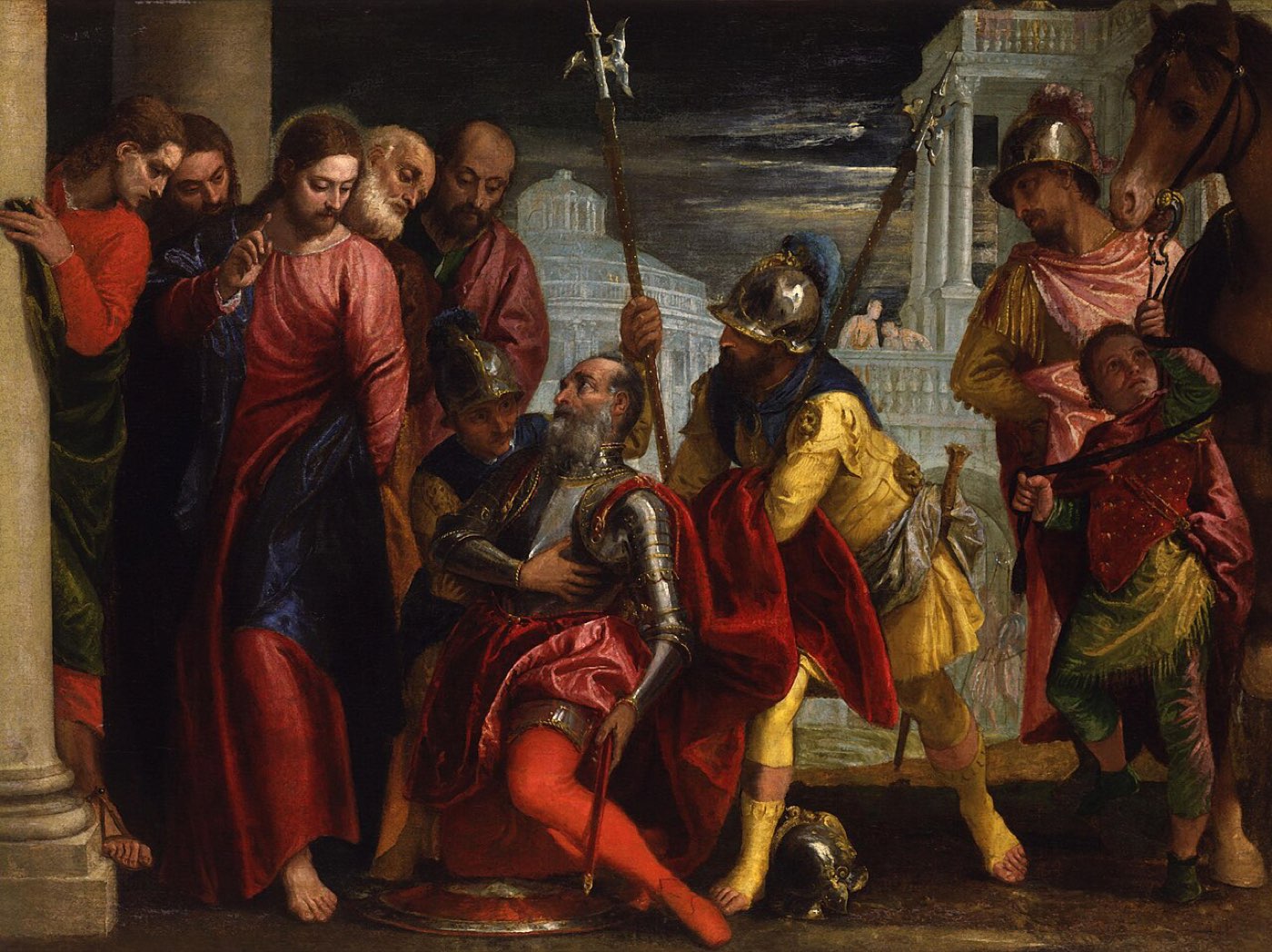
Only twice do the Gospels say Jesus marveled: once at Nazareth’s unbelief, and once at this man’s faith. A centurion – a Gentile career soldier commanding the garrison at Capernaum – had a servant he valued who lay dying. The local elders pleaded his case with a resume (“he loves our nation, and he is the one who built us our synagogue”), but the man’s own message went the other way: “Lord, do not trouble yourself, for I am not worthy to have you come under my roof… But say the word, and let my servant be healed” (Luke 7:1-10).
His logic was a soldier’s: “I too am a man set under authority… I say to one, ‘Go,’ and he goes.” He recognized in Jesus what he knew in himself – a word backed by real authority does not need to be physically present to be obeyed. Jesus turned to the crowd: “not even in Israel have I found such faith,” and added the forecast that many would come “from east and west” to recline at the kingdom’s table (Matthew 8:10-12). The centurion of Capernaum stands at the head of that procession – the first of the Gospel’s believing officers, ancestor in faith to the centurion at the cross and to Cornelius at Caesarea.
In the New Testament
- The healing of the centurion’s servant (Matthew 8:5-13; Luke 7:1-10)
- Kindred centurions: at the cross (Mark 15:39) and at Caesarea (Acts 10)
Key Locations
- Capernaum The fishing town on the lake's north shore that became Jesus' adopted home base.