
Balaam
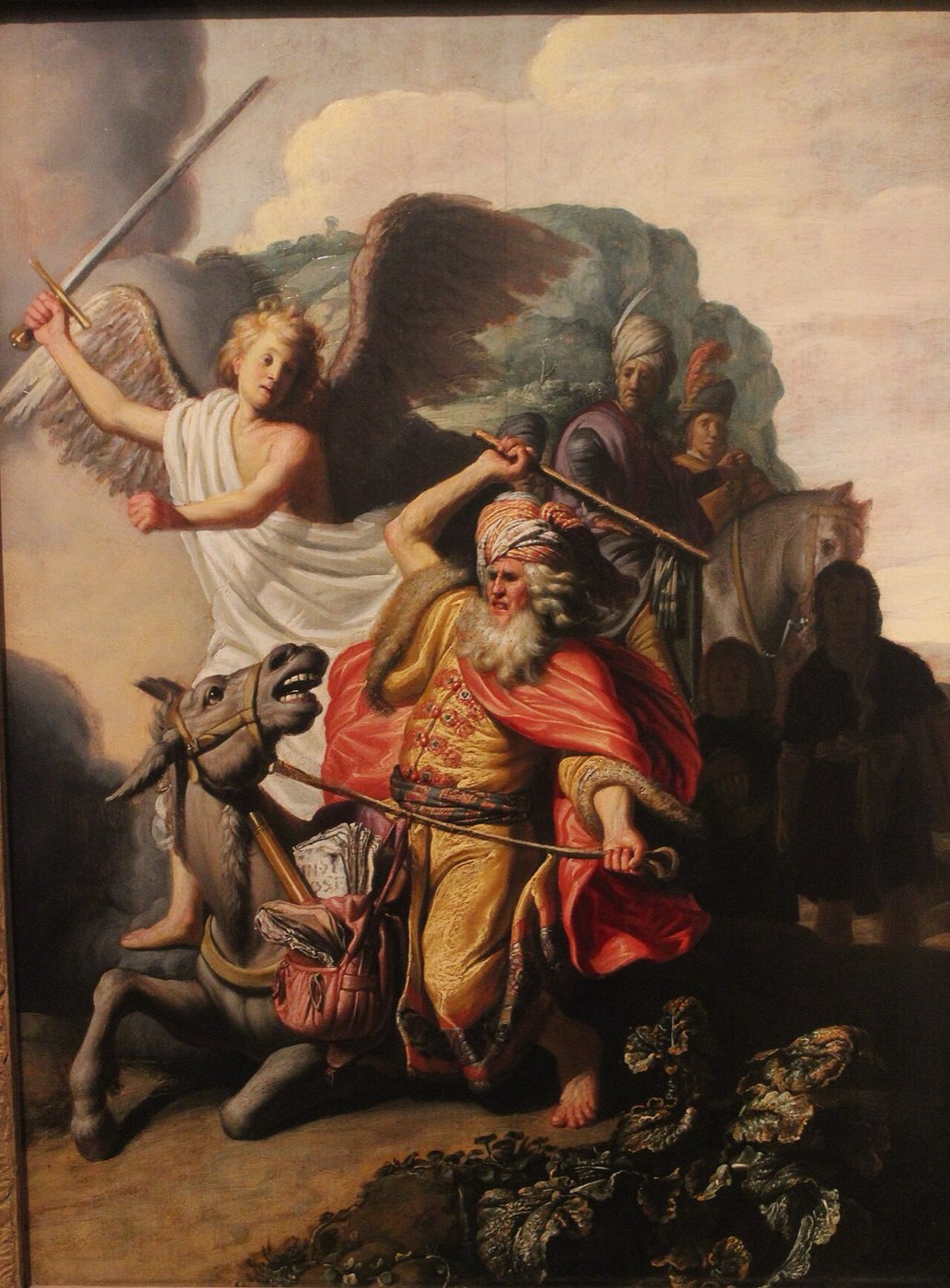
His story fills three strange chapters of Numbers: a genuinely gifted seer from the Euphrates, hired by Balak of Moab to curse Israel camped on the plains across the Jordan. God’s “no” was explicit, the fee was persuasive, and Balaam kept negotiating – until his donkey saw the angel his prophet-master could not, sat down under him, and finally spoke (Numbers 22). Four times on the heights Balaam opened his mouth to curse and blessing came out instead, including the star-and-scepter oracle the magi may have carried east (Numbers 23-24).
The sting is in the sequel. What cursing could not do, seduction did: Israel fell into immorality and idolatry at Peor – “by the counsel of Balaam,” Moses reveals later (Numbers 31:16). The seer who could not breach the covenant from outside consulted on breaching it from inside, and died in the ensuing war.
The New Testament remembers him three times, each catching a facet: “the way of Balaam… who loved gain from wrongdoing,” rebuked by his own beast (2 Peter 2:15-16); “the error of Balaam” as the type of ministry run “for gain” (Jude 11); and, most searchingly, “the teaching of Balaam” at Pergamum – the strategy of corrupting from within a church that persecution could not crack (Revelation 2:14). A prophet whose words were flawless and whose heart was for sale: Scripture keeps his file open as the permanent audit question for everyone who speaks for God.
In the New Testament
- The way of Balaam (2 Peter 2:15-16)
- The error of Balaam (Jude 11)
- The teaching of Balaam (Revelation 2:14)
- The source story (Numbers 22-24; 31:16)
Key Locations
- Perea The territory "beyond the Jordan" where Jesus ministered on his final approach to Jerusalem.