
Agrippa II and Bernice
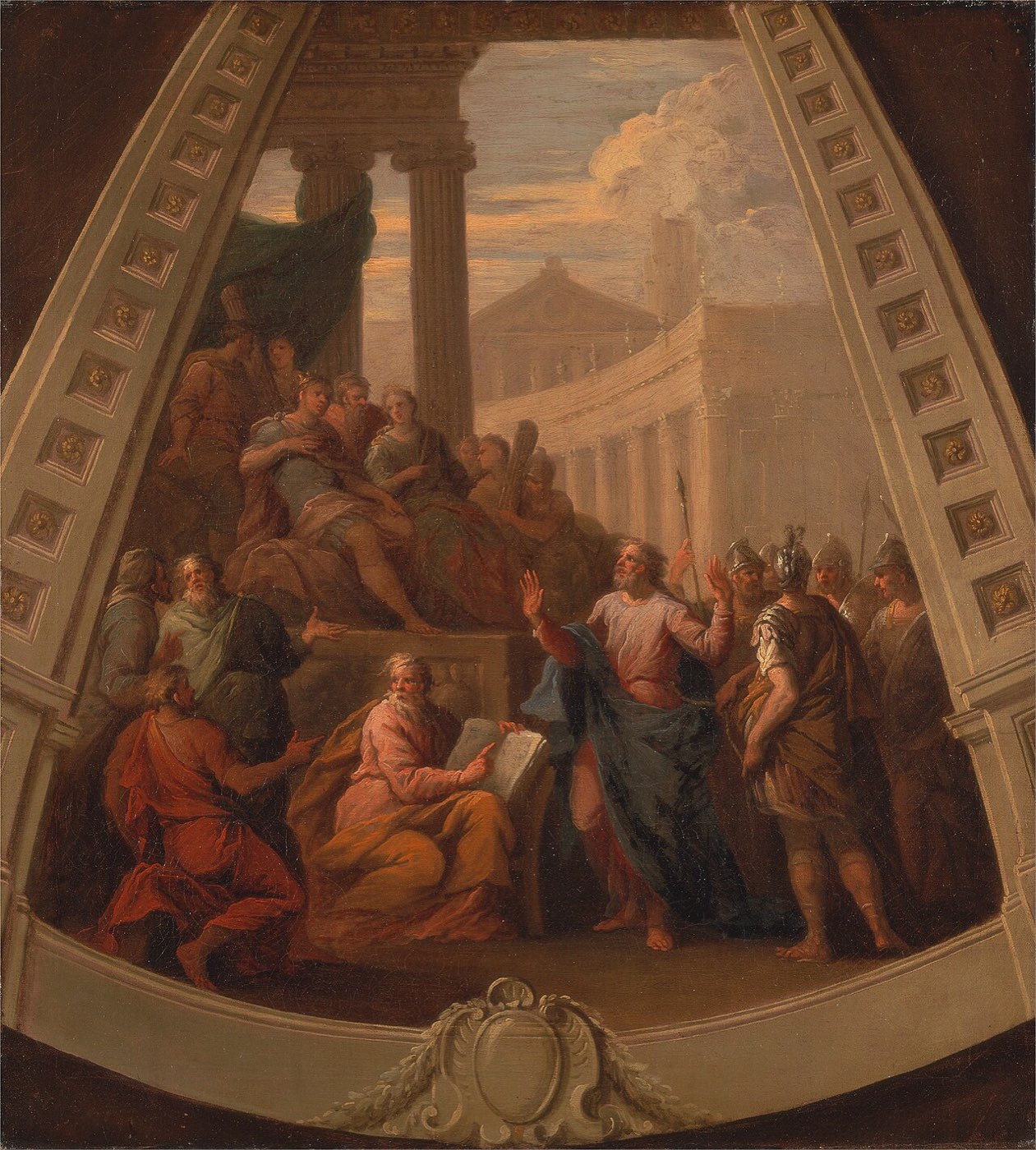
Herod Agrippa II was the dynasty’s last act: great-grandson of Herod the Great, raised in Claudius’ court, given a patchwork northern kingdom and – crucially – custody of the temple treasury and the appointment of high priests. That made him Rome’s house expert on Jewish religion, which is why Festus, stuck drafting charges he could not understand, gratefully accepted the king’s curiosity: “I would like to hear the man myself” (Acts 25:22). Bernice, his sister and constant companion (their relationship fed a scandal Josephus and Juvenal both repeat), came in “with great pomp.”
They got the greatest defense speech in Acts (Acts 26): Paul’s Pharisee youth, the Damascus road told in full, and the commission “to open their eyes, so that they may turn from darkness to light.” Paul pressed the expert directly: “King Agrippa, do you believe the prophets? I know that you believe.” The king’s reply – in the King James’ famous rendering, “Almost thou persuadest me to be a Christian” – deflected with irony what it could not dispute; Paul answered the irony with longing: “whether short or long, I would to God that… all who hear me this day might become such as I am – except for these chains” (Acts 26:27-29).
Rising, the royals delivered the verdict history remembers: “This man is doing nothing to deserve death or imprisonment… He could have been set free if he had not appealed to Caesar” (Acts 26:31-32). Agrippa lived on decades, sided with Rome in the war that burned the temple his family had gilded, and died the last of the Herods – the king who heard it all, and stayed almost.
In the New Testament
- The state hearing and Paul’s defense (Acts 25:13-26:32)
Key Locations
- Caesarea Maritima Herod's harbor city, Rome's capital in Judea -- home of Cornelius, Philip, and Paul's two-year imprisonment.