
Day 2: Peter's Confession, Keys of the Kingdom, Take Up Your Cross
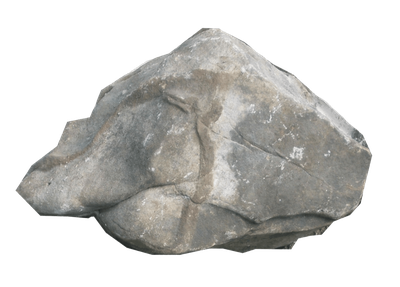
Reading: Matthew 16
Listen to: Matthew chapter 16
Historical Context
Matthew 16 presents the same pivotal moment as Mark 8:27-38 – Peter’s confession at Caesarea Philippi – but with substantial additional material that reflects Matthew’s distinctive theological interests, particularly his concern with ecclesiology (the nature and structure of the church) and with Peter’s unique role among the apostles. Understanding Matthew’s additions requires attention to his Jewish-Christian audience and to the debates about authority and community structure that shaped the early church.
The chapter opens with an encounter absent from the parallel in Mark 8. Pharisees and Sadducees come together to test Jesus by asking for “a sign from heaven” (v. 1). This unlikely alliance – the Pharisees and Sadducees were theological opponents who agreed on very little – underscores the growing unity of opposition against Jesus. The Pharisees were champions of oral tradition, belief in resurrection, and eschatological expectation. The Sadducees were aristocratic priestly families who rejected oral tradition, denied the resurrection, and were politically accommodating toward Rome. That these two groups could unite in opposing Jesus tells us something about the threat he represented to the entire religious establishment, not merely to one faction within it.
Jesus’ response to their demand uses a weather analogy (vv. 2-3) – an ability to read the sky but not the signs of the times. He then refuses to give a sign “except the sign of Jonah” (v. 4), pointing forward to his own death and resurrection as the ultimate authenticating sign. The “sign of Jonah” is multivalent: it refers to Jonah’s three days in the belly of the great fish (a type of Jesus’ burial and resurrection), to Jonah’s preaching of repentance to the Gentile city of Nineveh (a foreshadowing of the gospel going to the nations), and to the refusal of Jonah’s own people to respond with the same faith that the Ninevites showed.
The warning about “the leaven of the Pharisees and Sadducees” (vv. 6, 11-12) follows, and Matthew clarifies what Mark leaves ambiguous: the leaven is their “teaching” (didache, v. 12). The Pharisees’ leaven is the reduction of righteousness to external observance; the Sadducees’ leaven is theological minimalism that strips the faith of its supernatural content. Both distort the truth about God, and both are pervasive – leaven works silently through the entire batch of dough.
The heart of the chapter is Peter’s confession and Jesus’ response (vv. 13-20). Matthew’s version of Peter’s confession is fuller than Mark’s: “You are the Christ, the Son of the living God” (v. 16). The addition of “the Son of the living God” elevates the confession from a messianic claim to a divine one. Jesus’ response, unique to Matthew, is among the most discussed passages in all of Christian theology: “Blessed are you, Simon Bar-Jonah! For flesh and blood has not revealed this to you, but my Father who is in heaven” (v. 17). Peter’s confession is not the product of human insight but of divine revelation. The same principle Jesus stated in John 6:44 – “No one can come to me unless the Father who sent me draws him” – is operative here. True knowledge of Jesus’ identity is a gift from God, not an achievement of human reason.
Then comes the famous declaration: “And I tell you, you are Peter (Petros), and on this rock (petra) I will build my church, and the gates of hell shall not prevail against it” (v. 18). The wordplay between Petros (Peter’s name) and petra (rock) has generated centuries of debate. Roman Catholic tradition has understood this to mean that Peter himself is the rock on which the church is built, establishing the foundation for papal authority. Protestant interpreters have often argued that the rock is Peter’s confession of faith rather than his person, or that it is Christ himself. The Eastern Orthodox tradition emphasizes Peter’s role as first among equals rather than as a unique authority. Regardless of the precise interpretation, the passage establishes several things clearly: Jesus intends to build a community (ekklesia, the word for “assembly” or “congregation”), this community will endure against all opposition (“the gates of hell shall not prevail”), and Peter has a foundational role in its establishment.
The “keys of the kingdom of heaven” (v. 19) evoke Isaiah 22:22, where the key of the house of David is given to the steward Eliakim, granting him authority to open and shut. The power to “bind and loose” was technical rabbinic language for the authority to declare what is permitted and what is forbidden – to render authoritative decisions about the application of God’s law. Jesus is granting Peter (and later, in Matthew 18:18, the community as a whole) the authority to make binding interpretive decisions. This is not the authority to change God’s law but the authority to apply it faithfully in concrete situations.
Yet what follows immediately is the same devastating sequence found in Mark: the first passion prediction, Peter’s rebuke, and Jesus’ counter-rebuke. The disciple who has just been called the rock is now called Satan. The man who received the keys to the kingdom is told that his mind is set on human things rather than divine things. Matthew preserves this jarring juxtaposition without softening it. Peter is simultaneously the recipient of divine revelation and the mouthpiece of satanic temptation. This paradox is not resolved but left standing as a warning: spiritual insight does not guarantee spiritual maturity. A person can confess the truth about Jesus and immediately resist its implications.
The cost of discipleship section (vv. 24-28) is largely parallel to Mark but includes one significant addition. Matthew adds: “For the Son of Man is going to come with his angels in the glory of his Father, and then he will repay each person according to what he has done” (v. 27). This eschatological perspective – the promise of final judgment and reward – provides the motivational framework for self-denial. The willingness to lose one’s life in the present is grounded in the certainty that the Son of Man will return in glory. Discipleship is not blind sacrifice; it is investment in the only kingdom that will last. The closing verse – “Truly, I say to you, there are some standing here who will not taste death until they see the Son of Man coming in his kingdom” (v. 28) – likely refers to the Transfiguration, which follows immediately in Matthew 17, providing a preliminary glimpse of the glory that awaits.
Key Themes
- Divine revelation as the basis of faith – Peter’s confession is not human achievement but God’s gift. Knowing Jesus truly requires the Father’s initiative, not merely human observation or reasoning.
- The church built on rock – Jesus announces his intention to build a community that no power of death or evil can destroy. This community is entrusted with authority to interpret and apply God’s will on earth.
- The paradox of Peter – The same disciple is blessed and rebuked, called “rock” and called “Satan.” Spiritual authority and spiritual failure coexist in the same person, a sobering reality for all who lead in Jesus’ name.
Connections
- Old Testament Roots: Isaiah 22:22 (the key of the house of David), Isaiah 28:16 (the cornerstone in Zion), Daniel 7:13-14 (the Son of Man coming in glory), 2 Samuel 7:12-14 (the Davidic covenant and divine sonship).
- New Testament Echoes: Ephesians 2:20 (the church built on the foundation of apostles and prophets), 1 Peter 2:4-8 (Christ as the living stone, believers as living stones), Revelation 1:18 (Christ holds the keys of Death and Hades), Revelation 3:7 (the one who holds the key of David).
- Parallel Passages: Mark 8:27-38 and Luke 9:18-27 provide the parallel accounts. Mark lacks the “blessed are you” statement and the keys passage; Luke omits Peter’s rebuke and Jesus’ “Get behind me, Satan.”
Reflection Questions
- Jesus says that Peter’s confession was revealed “not by flesh and blood, but by my Father who is in heaven.” How does this shape your understanding of how people come to faith? What role do human effort and divine initiative each play?
- Peter is called both “the rock” and “Satan” within the span of a few verses. What does this juxtaposition teach you about the relationship between spiritual gifting and spiritual maturity?
- “What will a man give in exchange for his soul?” (v. 26). What are you tempted to trade your soul for – not in dramatic, obvious ways, but in the small, daily exchanges of priority and attention?
Prayer
Father in heaven, we thank you that knowledge of your Son does not depend on our cleverness or virtue but on your gracious revelation. Open our eyes as you opened Peter’s. And where, like Peter, we resist the way of the cross, rebuke us with the same fierce love that Jesus showed his disciple. Build your church on the rock of true confession, and give us the authority to loose what you loose and bind what you bind. May we invest our lives in your kingdom – the only kingdom that the gates of hell cannot destroy. Through Jesus Christ, the Son of the living God. Amen.
Discussion
Comments are powered by GitHub Discussions. To post, sign in with your GitHub account using the link below the reaction icons.