
Day 5: Feeding the 5000, Walking on Water, Bread of Life Discourse Begins
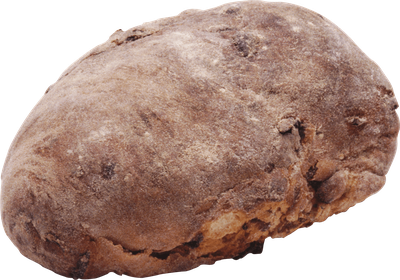
Reading: John 6:1-40
Listen to: John chapter 6
Historical Context
John 6 is one of the most theologically dense chapters in the New Testament, and the section we read today – verses 1-40 – moves from two of Jesus’ most spectacular miracles to the opening salvo of his most controversial discourse. What the Synoptic Gospels narrate as acts of power, John interprets as signs (semeia) that point beyond themselves to the identity and mission of the one who performs them. The feeding of the five thousand and the walking on water are not merely demonstrations of supernatural ability; they are enacted parables of who Jesus is and what he offers to the world.
John opens with a time marker – “After this” – and a note that “the Passover, the feast of the Jews, was at hand” (6:4). This is the second of three Passovers mentioned in John’s Gospel (2:13; 6:4; 11:55), and its proximity to the feeding miracle is not coincidental. Passover celebrated God’s deliverance of Israel from Egypt and the provision of the Passover lamb whose blood marked the doorposts. The manna in the wilderness, which sustained Israel between the exodus and the conquest, was closely associated with Passover theology. By placing the feeding miracle in a Passover context, John signals that the event must be read against the backdrop of Israel’s foundational story: the God who fed his people with bread from heaven is about to do it again, but in a way that transcends the original.
The setting is “the other side of the Sea of Galilee” (6:1), near Bethsaida on the northeastern shore. A large crowd has followed Jesus “because they saw the signs that he was doing on the sick” (6:2). John notes that Jesus “went up on the mountain” (6:3) – language that evokes Moses ascending Sinai. The parallel is deliberate: just as Moses went up the mountain and received the law, including the promise of manna, so Jesus ascends and will provide bread. But Jesus is not merely a new Moses; he is what Moses pointed to.
John includes a detail absent from the Synoptics: Jesus tests Philip by asking, “Where are we to buy bread, so that these people may eat?” (6:5). John’s editorial comment – “He said this to test him, for he himself knew what he would do” (6:6) – emphasizes Jesus’ sovereign foreknowledge. Philip calculates the cost: “Two hundred denarii worth of bread would not be enough for each of them to get a little” (6:7). A denarius was a day’s wage for a common laborer, so Philip is estimating roughly eight months’ wages – an impossible sum for an itinerant band of teachers. Andrew then identifies a boy with “five barley loaves and two fish” (6:9), adding the helpless understatement, “but what are these for so many?” Barley was the bread of the poor – less expensive and less desirable than wheat. The miracle begins not with abundance but with poverty, not with adequacy but with insufficiency. This is the consistent pattern of God’s provision throughout Scripture: the widow’s jar of oil that does not run out (1 Kings 17:16), the handful of flour that sustains through the famine (1 Kings 17:12-16), the mustard seed that becomes a great tree. God works from what is small, inadequate, and offered.
Jesus takes the loaves, gives thanks (eucharistesas – the verb from which “Eucharist” derives), and distributes them. John does not mention the disciples distributing; Jesus himself gives to the people, emphasizing the directness of his provision. When all are satisfied, Jesus instructs the disciples to “gather up the leftover fragments, that nothing may be lost” (6:12). The word “lost” (apollymi) is the same word Jesus will use in verse 39: “I should lose nothing of all that he has given me.” The physical bread that is not wasted prefigures the spiritual reality that no one given to Jesus by the Father will be lost. Twelve baskets remain – one for each tribe of Israel, one for each apostle, a superabundance that exceeds the need.
The crowd’s response is immediate and political: “This is indeed the Prophet who is to come into the world!” (6:14). The reference is to Deuteronomy 18:15, where Moses promises that God will raise up “a prophet like me.” First-century Jewish expectation held that this Prophet would perform the same signs Moses did, including providing manna. The crowd connects the dots: Jesus has fed them bread in the wilderness, therefore he is the Prophet, therefore he should be king. John adds that Jesus “perceived that they were about to come and take him by force to make him king” (6:15). The verb harpazein (“to seize by force”) is violent – this is not a polite request but a political insurrection in the making. Jesus withdraws to the mountain alone, refusing the crown that comes apart from the cross.
The walking on water (6:16-21) occurs that evening. The disciples are rowing across the lake toward Capernaum when a strong wind arises. After rowing three or four miles – roughly the middle of the lake – they see Jesus “walking on the sea and coming near the boat” (6:19). The Greek phrase peripateo epi tes thalasses is identical to Job 9:8 in the Septuagint, where it describes God alone: “who alone stretched out the heavens and trampled the waves of the sea.” Jesus’ words to the terrified disciples – ego eimi, me phobeisthe (“It is I; do not be afraid”) – carry the same theophanic weight they carry in Mark’s account. The phrase ego eimi is the Greek rendering of God’s self-revelation at the burning bush (Exodus 3:14) and of the divine declarations in Isaiah 41:4, 43:10, and 46:4. John’s Jesus walks on the chaos waters as Yahweh walks on them, and he speaks the divine name as Yahweh speaks it. The immediately following detail – “and immediately the boat was at the land to which they were going” (6:21) – adds a third miracle to the sequence: the instantaneous arrival at the destination, as if space itself conformed to Jesus’ will.
The discourse begins the next day in the Capernaum synagogue (6:59). The crowd has followed Jesus across the lake, and he challenges their motivation: “You are seeking me, not because you saw signs, but because you ate your fill of the loaves” (6:26). They saw the miracle but missed the sign. They wanted the bread but not the Baker; the gift but not the Giver. Jesus redirects their appetite: “Do not work for the food that perishes, but for the food that endures to eternal life, which the Son of Man will give to you” (6:27).
The crowd asks what works they must do, and Jesus answers with the most radical simplification of religion in Scripture: “This is the work of God, that you believe in the one whom he has sent” (6:29). The singular “work” (ergon) replaces the plural “works” (erga) of their question. All the works of the law, all the obligations of religious observance, are condensed into one act: trusting Jesus. The crowd then asks for a sign, citing the manna tradition: “Our fathers ate the manna in the wilderness” (6:31), quoting Psalm 78:24. Jesus corrects their theology on two points: it was not Moses but “my Father” who gave the bread, and the true bread from heaven “gives life to the world” (6:33) – not just to Israel, but to the world.
The climax of this section is the first of John’s seven great “I AM” (ego eimi) sayings: “I am the bread of life; whoever comes to me shall not hunger, and whoever believes in me shall never thirst” (6:35). The statement is absolute and exclusive. Jesus does not say he gives bread; he says he is bread. He does not offer a way to satisfaction; he is satisfaction. The conditional promises – “whoever comes” and “whoever believes” – are open invitations, but the verse that follows introduces divine sovereignty: “All that the Father gives me will come to me” (6:37). The tension between human responsibility (“whoever comes”) and divine initiative (“the Father gives”) is not resolved in John’s Gospel; it is held together as a mystery that preserves both the urgency of human decision and the priority of divine grace.
Jesus closes this portion with a promise that grounds all of salvation in the will of the Father: “This is the will of him who sent me, that I should lose nothing of all that he has given me, but raise it up on the last day” (6:39). The security of the believer rests not on the strength of human faith but on the faithfulness of the Son to the Father’s will. What the Father gives, the Son keeps; what the Son keeps, no one can take.
Key Themes
- Signs and their meaning – The feeding and the sea-walking are not ends in themselves but signs pointing to Jesus’ identity as the divine provider and the bread of life
- The bread of life – Jesus claims to be the ultimate satisfaction of human hunger, surpassing the manna of Moses and the expectations of Israel
- Divine sovereignty and human responsibility – Coming to Jesus requires both the Father’s drawing and the individual’s believing, held together without resolution
Connections
- Old Testament Roots: Exodus 16 (the manna in the wilderness); Psalm 78:24 (“he gave them grain of heaven”); Job 9:8 (God treads on the waves of the sea); Deuteronomy 18:15 (the Prophet like Moses); Isaiah 55:1-2 (“come, buy bread without money”)
- New Testament Echoes: John 6:41-71 (the continuation of the Bread of Life discourse); 1 Corinthians 10:1-4 (spiritual food and drink in the wilderness); Revelation 2:17 (the hidden manna); John 10:28-29 (no one can snatch them from my hand)
- Parallel Passages: Matthew 14:13-33; Mark 6:30-52; Luke 9:10-17
Reflection Questions
- The crowd wanted Jesus to be king on their terms – a provider of bread and a political liberator. In what ways are we tempted to follow Jesus for what he gives us rather than for who he is?
- Jesus says, “This is the work of God, that you believe in the one whom he has sent.” How does this statement challenge both legalistic religion (which multiplies requirements) and passive religion (which demands nothing)?
- “I am the bread of life.” What does it mean practically to “feed on” Christ – not just to believe facts about him, but to find your deepest satisfaction in him?
Prayer
Lord Jesus, Bread of Life, you fed five thousand in the wilderness and walked upon the sea, yet we confess that we are often more interested in the bread than in the Baker. Forgive our shallow appetites. Teach us to labor not for food that perishes but for the food that endures to eternal life. Draw us to yourself by the Father’s grace, and hold us fast by your faithfulness, that nothing given to you may be lost. Satisfy our deepest hunger with yourself alone. Amen.
Discussion
Comments are powered by GitHub Discussions. To post, sign in with your GitHub account using the link below the reaction icons.