
Day 4: Parables: Sower, Lamp, Growing Seed, Mustard Seed, Stilling the Storm
Reading: Mark 4
Listen to: Mark chapter 4
Historical Context
Mark 4 is the great parable chapter of the Second Gospel, and it marks a significant shift in Jesus’ teaching method. Up to this point in Mark, Jesus has taught in synagogues, healed the sick, and debated with religious authorities. Now he turns to parables – the distinctive, enigmatic form of teaching that will characterize much of his ministry from this point forward. The chapter opens with a vivid scene: Jesus sits in a boat on the Sea of Galilee, teaching a crowd gathered on the shore. This natural amphitheater, with the water carrying his voice to the curving shoreline, was a practical solution to crowd management. But it was also symbolically rich – the teacher of Israel is literally positioned between the sea (a symbol of chaos in the Hebrew imagination) and the land (the ordered, inhabited world), mediating the word of God to the people gathered on the boundary.
The word parabolē comes from the Greek para (“alongside”) and ballō (“to throw”) – it literally means “to throw alongside,” to place two things side by side for comparison. In the Septuagint, parabolē translates the Hebrew mashal, which covers a wide range of literary forms: proverbs, riddles, allegories, taunt songs, and prophetic oracles. Jesus’ parables are not simple illustrations designed to make difficult truths easy. They are evocative, open-ended narratives that function more like a net than a bullet – they catch different listeners in different ways, inviting some deeper and repelling others. Jesus explains this dual function in 4:11-12, quoting Isaiah 6:9-10: “so that they may indeed see but not perceive, and may indeed hear but not understand, lest they should turn and be forgiven.” This is one of the hardest sayings in the Gospels. It does not mean God arbitrarily blinds some people; it means that revelation always functions as a dividing line. The same sun that melts wax hardens clay. The same parable that opens the receptive heart confirms the closed one in its closure.
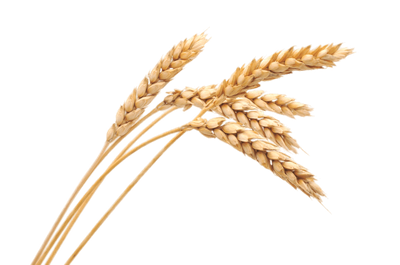
The Parable of the Sower (4:3-9, 13-20) is both a parable and a parable about parables – it explains how the word of the Kingdom works in different kinds of human hearts. The sower broadcasts seed indiscriminately (ancient sowing was done by hand, scattering seed broadly across a field before plowing it under). The four types of soil represent four responses to the proclaimed word. The path (hodos) represents hard-packed ground where seed cannot penetrate and is immediately snatched by birds (Satan, 4:15). The rocky ground (petrodes) represents shallow soil over limestone bedrock – common in Galilee – where seed sprouts quickly because there is no depth of earth, but withers in the heat because the roots cannot go down. This represents the enthusiastic but shallow response that collapses under pressure or persecution (4:16-17). The thorny ground (akanthōn) represents soil that produces competing growth – “the cares of the world and the deceitfulness of riches and the desires for other things” (4:19) – that choke the word and prevent fruitfulness. The good soil (kalēn gēn) receives the word, holds it, and produces a harvest of thirty, sixty, or a hundredfold.
The yield figures are significant. In first-century Palestine, a grain harvest of tenfold was considered good, and fifteenfold was exceptional. Yields of thirty, sixty, and a hundredfold are spectacular – almost miraculous. Jesus is saying that when the word truly takes root in receptive soil, the results exceed all normal expectations. The parable is both a warning (three out of four soils fail to produce lasting fruit) and an encouragement (the one that succeeds produces an extraordinary harvest). It is also an invitation to self-examination: which soil am I?
The Parable of the Lamp (4:21-25) makes the point that what is hidden is meant to be revealed. A lamp (lychnos) is not brought into a room to be placed under a basket (modios) or under a bed (klinē). Its purpose is to give light. Similarly, the “secret” character of the Kingdom – its present hiddenness, its veiled presence in parables – is temporary. “For nothing is hidden except to be made manifest; nor is anything secret except to come to light” (4:22). The Kingdom may look hidden now, like seed buried in soil, but it will be fully revealed in God’s timing.
The Parable of the Growing Seed (4:26-29) is unique to Mark – it appears in no other Gospel. A man scatters seed on the ground. He sleeps and rises, night and day, and the seed sprouts and grows – “he knows not how” (hōs ouk oiden autos). The earth produces fruit “by itself” (automatē, from which we get “automatic”). First the blade, then the ear, then the full grain in the ear. This parable offers a profound corrective to human anxiety about the Kingdom’s progress. The farmer does his part – he sows – but the growth is God’s work, operating by an internal power that the farmer cannot see, control, or even understand. This does not sanction passivity (the farmer still sows and eventually harvests), but it liberates us from the illusion that the Kingdom’s success depends on our efforts alone. The word carries its own life-giving power.
The Parable of the Mustard Seed (4:30-32) is one of the most familiar and most misunderstood of Jesus’ parables. The mustard seed (sinapi) was proverbially the smallest seed known to Palestinian farmers (not the smallest seed in absolute botanical terms, but the smallest in their agricultural experience). Yet when planted, it grows into a large shrub – Mark says it “puts out large branches, so that the birds of the air can make nests in its shade” (4:32). The image of birds nesting in branches echoes Daniel 4:12 and Ezekiel 17:23, where a great tree sheltering birds represents a mighty kingdom that provides protection for many nations. Jesus is making a subversive comparison: the Kingdom of God starts as something ridiculously small – a handful of Galilean fishermen, a carpenter’s son from Nazareth – but it will grow into something that provides shelter for the nations. The contrast between beginning and end is the point. Do not despise the day of small things (Zechariah 4:10).
The chapter concludes with the stilling of the storm (4:35-41), which we also encountered in Matthew 8 but which Mark narrates with his characteristic vivid detail. Mark alone tells us that Jesus was sleeping “on a cushion” (proskephalaion) in the stern. The disciples’ cry – “Teacher, do you not care that we are perishing?” (ou melei soi) – is rawer and more accusatory than Matthew’s version. Jesus rebukes the wind and says to the sea, “Peace! Be still!” (siōpa, pephimōso – literally “Be silent! Be muzzled!”). The second verb is a perfect passive imperative, a rare and forceful grammatical construction that commands a permanent state: “Be muzzled and stay muzzled.” The sea becomes “a great calm” (galēnē megalē). The disciples’ response – “Who then is this, that even the wind and the sea obey him?” (4:41) – is the central question of Mark’s Gospel. They have been with him, heard his parables, watched his miracles, and they still do not fully understand. Mark’s Gospel is an extended journey toward the answer, which will finally be spoken by the centurion at the cross: “Truly this man was the Son of God” (15:39).
Key Themes
- The Hidden Kingdom – The parables reveal that God’s Kingdom operates by a hidden, organic logic. It grows like seed – slowly, imperceptibly, by an internal power that cannot be controlled or hurried by human effort.
- The Power of the Word – The Sower parable is fundamentally about how God’s word interacts with the human heart. The word itself is potent; the variable is the soil. The quality of our receptivity determines the fruitfulness of the word in our lives.
- Small Beginnings, Vast Outcomes – The mustard seed parable teaches that the Kingdom’s humble, even laughable beginnings are no indicator of its ultimate scope. God consistently works through the insignificant to accomplish the magnificent.
Connections
- Old Testament Roots: Isaiah 6:9-10 (seeing but not perceiving, the passage Jesus quotes), Daniel 4:10-12 and Ezekiel 17:22-24 (the great tree sheltering birds as a kingdom metaphor), Psalm 107:23-32 (God calming the storm at sea), Zechariah 4:10 (do not despise small beginnings).
- New Testament Echoes: 1 Corinthians 3:6-7 (“I planted, Apollos watered, but God gave the growth”), Colossians 1:6 (the gospel bearing fruit and growing in all the world), James 1:21 (receive with meekness the implanted word), Hebrews 4:12 (the word of God is living and active).
- Parallel Passages: Matthew 13:1-23 and Luke 8:4-15 (Parable of the Sower), Matthew 13:31-32 and Luke 13:18-19 (Mustard Seed), Matthew 8:23-27 and Luke 8:22-25 (Stilling the Storm).
Reflection Questions
- In the Parable of the Sower, which type of soil best describes your heart’s current response to God’s word? What specific “thorns” – cares, riches, desires – most threaten to choke the word in your life?
- The Parable of the Growing Seed says the farmer “knows not how” the seed grows. How does this truth free you from the pressure to make the Kingdom grow by your own effort? What is the difference between faithful sowing and anxious control?
- The disciples panicked in the storm despite Jesus being in the boat with them. When have you experienced a “storm” where you forgot that Jesus was present? What did his “Peace, be still!” look like in that situation?
Prayer
Lord of the harvest, you scatter your word with lavish generosity, trusting the soil to receive it and the seed to carry its own life. We confess that our hearts are often hard, shallow, or cluttered with competing desires. Break up the fallow ground of our souls. Root out the thorns. Make us good soil that receives your word and bears fruit beyond anything we could produce on our own. And when the storms come, remind us that you are in the boat, and that your word of peace has authority over every wind and wave. Amen.
Discussion
Comments are powered by GitHub Discussions. To post, sign in with your GitHub account using the link below the reaction icons.