
The Praetorium
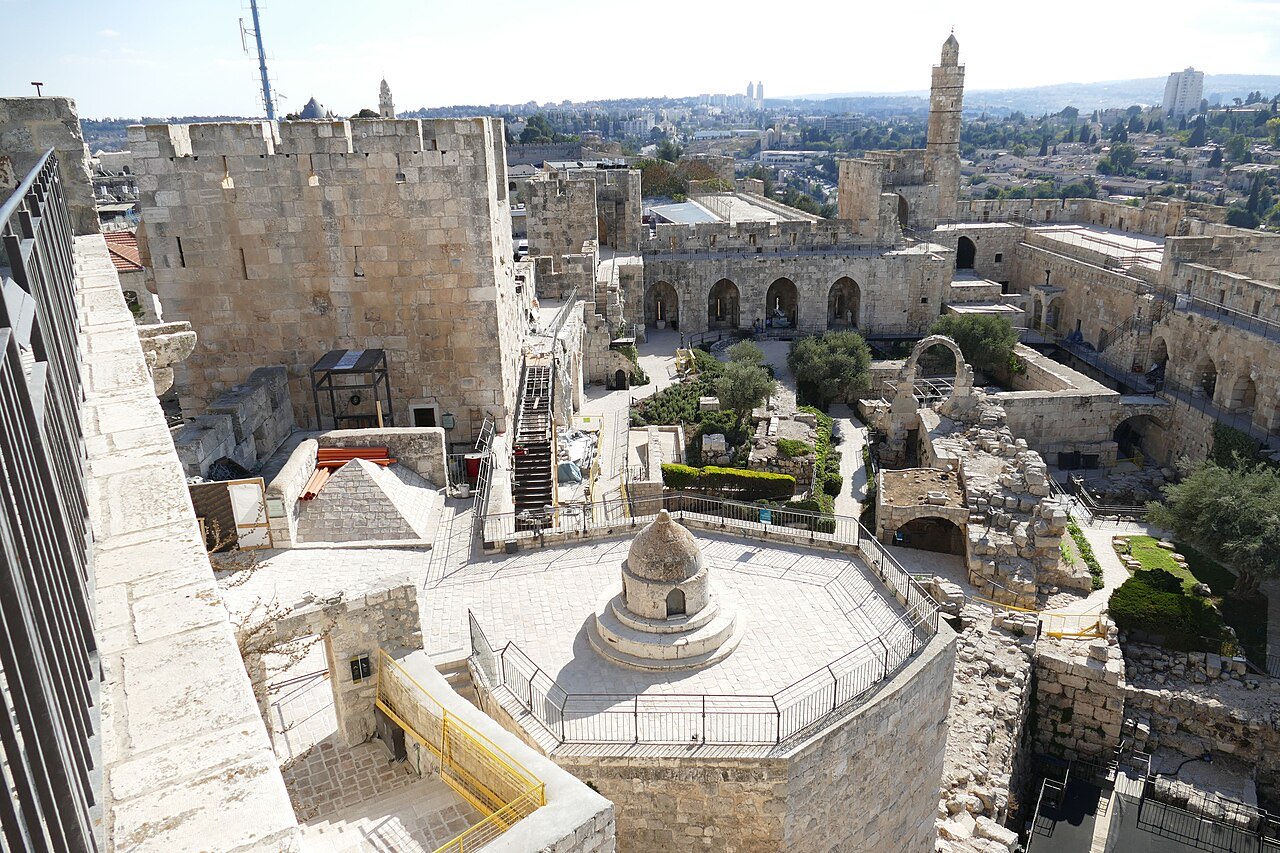
“Praetorium” is not a building’s name but an office’s: wherever the Roman governor resided became his praetorium. Pilate lived in Caesarea and came up to Jerusalem for the feasts, when riots were likeliest, and on those visits he most likely occupied Herod the Great’s colossal palace on the city’s western hill – though the Antonia Fortress, the garrison overlooking the temple courts, has its own long tradition. The citadel by today’s Jaffa Gate preserves the palace’s foundations.
Here the Roman trial unfolded (John 18:28-19:16): the accusers standing outside to avoid defilement before Passover, Pilate shuttling in and out, the questions – “Are you the King of the Jews?” “What is truth?” – the scourging, the crown of thorns, the purple robe, the crowd’s choice of Barabbas, and the governor’s slow collapse from “I find no guilt in him” to “Behold the man!” to washing his hands and handing him over. Luke adds the side-trip to Herod Antipas, in Jerusalem for the feast at the old Hasmonean palace nearby (Luke 23:6-12). At a paved court called Gabbatha, Pilate sat on the judgment seat and sentenced the Judge of all the earth.
The praetorium returns in Acts: the tribune’s soldiers rescued Paul from the temple mob into the Antonia Fortress – “the barracks” – from whose steps he addressed the crowd (Acts 21:31-40), and Paul was later held “in Herod’s praetorium” at Caesarea (Acts 23:35).
In the New Testament
- The trial before Pilate (Matthew 27:11-31; John 18:28-19:16)
- Jesus mocked by the soldiers inside the praetorium (Mark 15:16-20)
- Paul and the Antonia barracks (Acts 21:31-22:29)
- “Herod’s praetorium” in Caesarea (Acts 23:35); the praetorian guard hears of Christ (Philippians 1:13)