
The Pool of Siloam
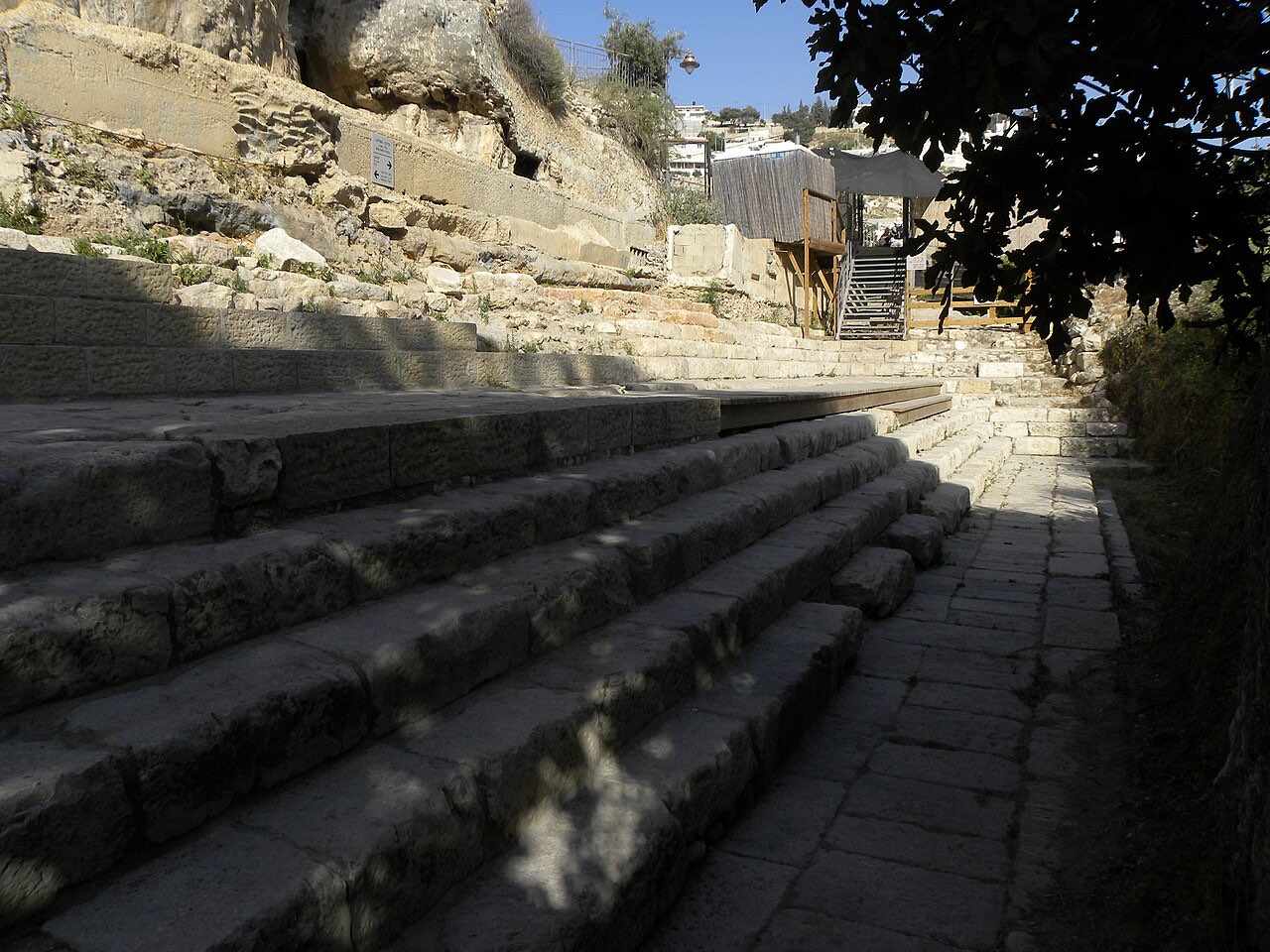
Siloam was Jerusalem’s water. Hezekiah’s engineers had cut a tunnel through a third of a mile of bedrock to bring the Gihon spring inside the walls (2 Kings 20:20), and the pool at the tunnel’s end – at the city’s southern tip – was where that living water gathered. During the Feast of Tabernacles, priests drew water from Siloam each morning and carried it up to the temple in procession, the ceremony behind Jesus’ shout, “If anyone thirsts, let him come to me and drink” (John 7:37-38).
John 9 turns the pool into a stage. Jesus anointed a blind beggar’s eyes with mud and told him, “Go, wash in the pool of Siloam (which means Sent).” John underlines the name: the man sent to the pool is healed by the One sent from the Father. He “went and washed and came back seeing” – and then out-argued the Pharisees with the unanswerable logic of experience: “One thing I know: I was blind, and now I see.”
The actual first-century pool, a grand stepped basin, was rediscovered in 2004 during sewer repairs, and its excavated steps can be walked today.
In the New Testament
- The healing of the man born blind (John 9)
- The Tabernacles water ceremony behind John 7:37-39
- The tower of Siloam that fell (Luke 13:4)