
The Pool of Bethesda
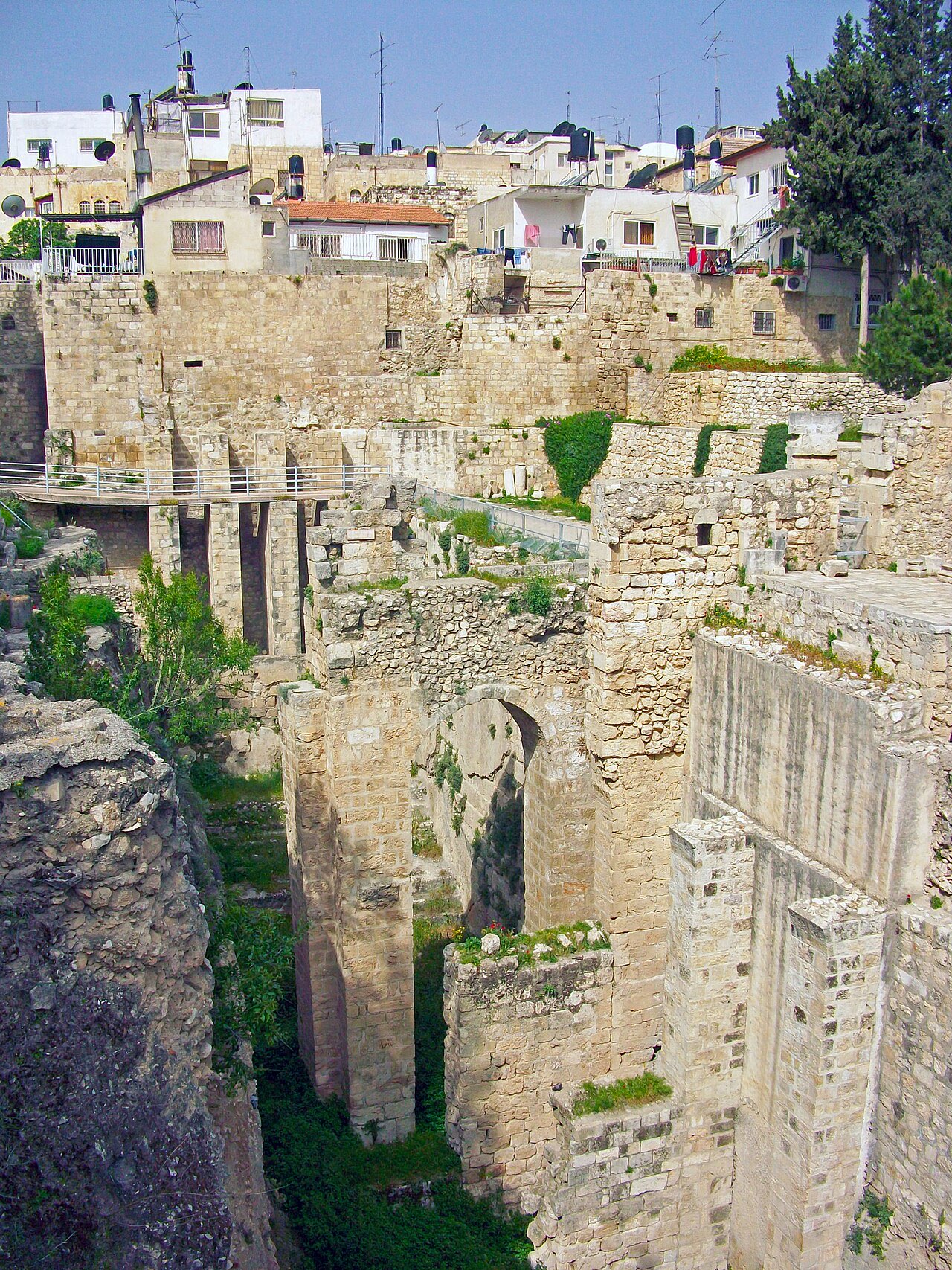
John describes the place with a tour guide’s precision: “in Jerusalem by the Sheep Gate a pool, in Aramaic called Bethesda, which has five roofed colonnades” (John 5:2). For centuries skeptics doubted a five-sided colonnade existed – until excavations north of the temple mount uncovered exactly that: twin pools with porticoes on four sides and a fifth across the dividing wall between them. The pools lie today beside the Church of St. Anne, nearly forty feet below street level.
Under those colonnades lay “a multitude of invalids – blind, lame, and paralyzed,” waiting on a superstition about the stirring of the water. Jesus singled out a man who had been unable to walk for thirty-eight years and asked the question that still stops readers cold: “Do you want to be healed?” The man answered with his excuse; Jesus answered with a command: “Get up, take up your bed, and walk” (John 5:1-9).
It was the Sabbath, and this healing lit the fuse of the Jerusalem controversy that runs through the rest of John’s Gospel. Jesus’ defense was not an apology but a claim: “My Father is working until now, and I am working” – and his opponents understood exactly what that meant (John 5:17-18).
In the New Testament
- The healing at the pool (John 5:1-15)
- The Sabbath controversy and Jesus’ claim of equality with the Father (John 5:16-47)