
Patmos
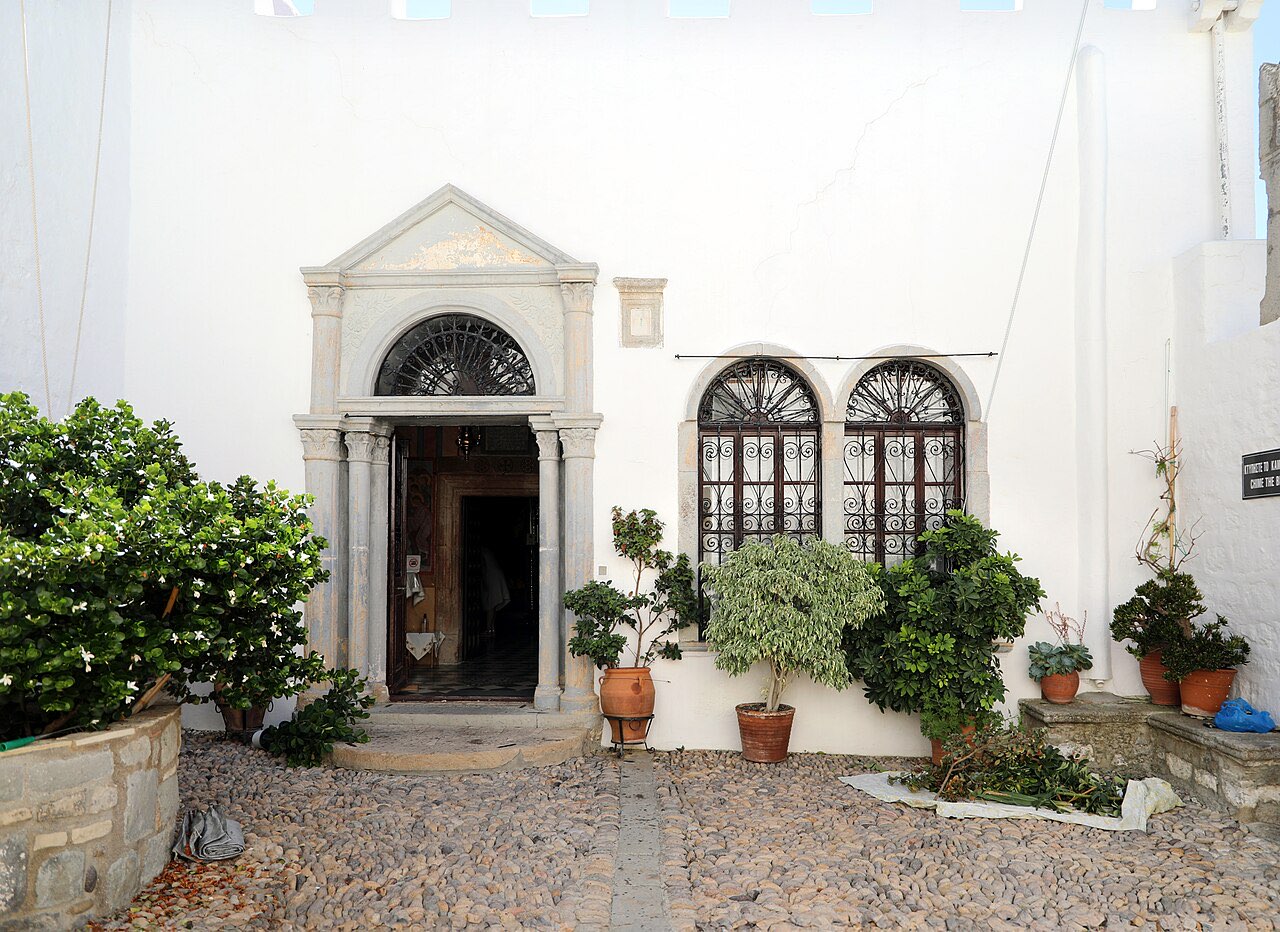
Patmos is a rocky, volcanic island barely ten miles long, lying off the coast of Asia Minor a day’s sail from Ephesus. Rome found such islands useful for banishment, and that is how the New Testament’s last author arrived: “I, John, your brother and partner in the tribulation… was on the island called Patmos on account of the word of God and the testimony of Jesus” (Revelation 1:9). An old man, exiled for preaching, cut off from the seven churches he loved.
Exile turned into unveiling. “I was in the Spirit on the Lord’s day” – and the island’s silence filled with a voice like a trumpet and a vision of the risen Christ among the lampstands, eyes like fire, “the living one… I have the keys of Death and Hades” (Revelation 1:10-18). Everything that follows – the letters to the seven churches, the throne room, the Lamb, the judgments, the fall of Babylon, the new Jerusalem – was seen from this scrap of rock. Rome meant Patmos as a silencing; it became the listening post from which the church heard its future.
The island’s Cave of the Apocalypse, venerated as the place of the vision, and the fortress-like Monastery of St. John above it have made Patmos a pilgrim island for nine centuries.
In the New Testament
- John’s exile and commission (Revelation 1:9-20)
- The visions received “in the Spirit” on the island (Revelation 4:1-2; 17:3; 21:10)