
The New Jerusalem
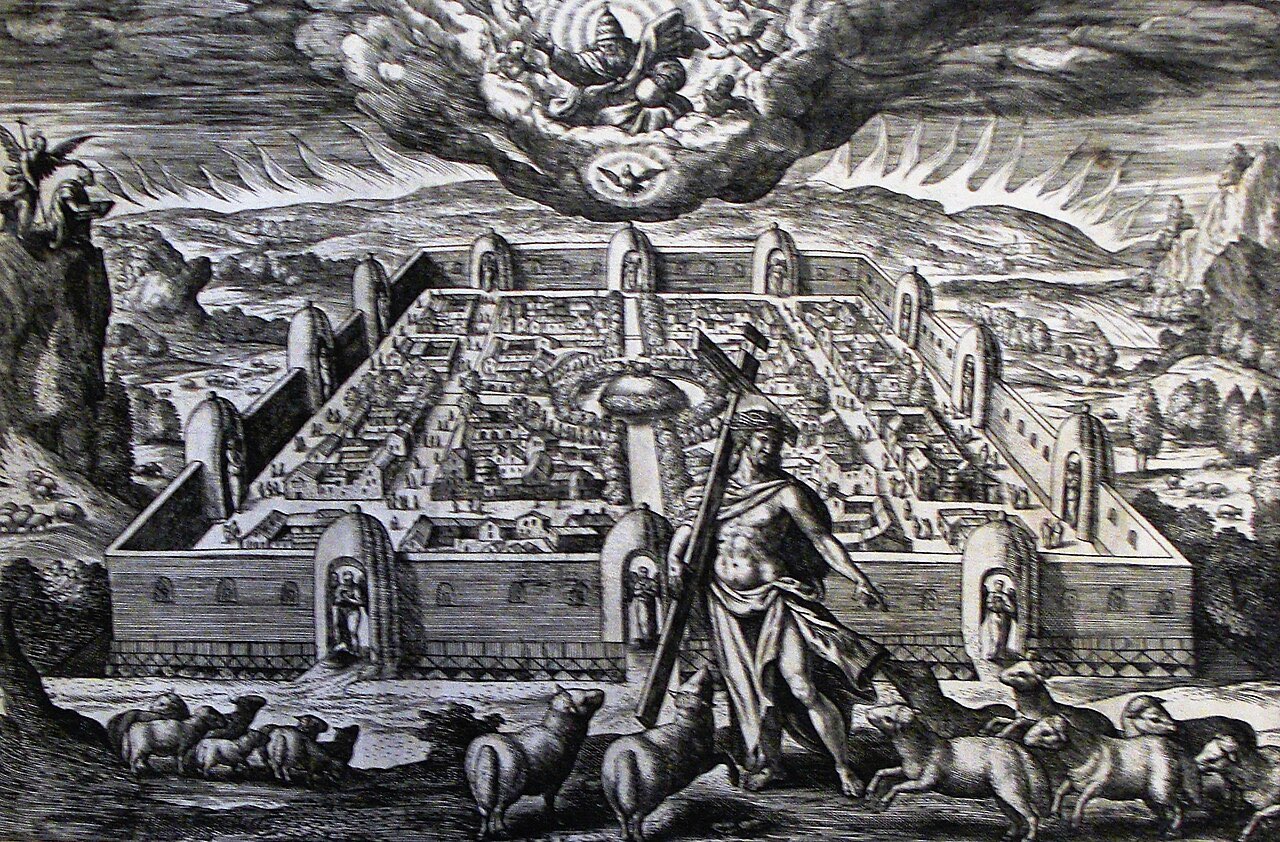
No surveyor will ever plot this city, yet Scripture describes it more precisely than any other: foursquare, twelve gates of pearl named for the tribes, twelve foundations named for the apostles, a street of transparent gold, no temple – “for its temple is the Lord God the Almighty and the Lamb” – and no need of sun, “for the glory of God gives it light” (Revelation 21). John watches it come down: “I saw the holy city, new Jerusalem, coming down out of heaven from God, prepared as a bride adorned for her husband.” Heaven’s capital relocates to a renewed earth, and the announcement follows: “Behold, the dwelling place of God is with man.”
The city casts its light backward through the whole New Testament. Paul calls her “the Jerusalem above… she is our mother,” free where Sinai’s covenant bound (Galatians 4:26). Hebrews says believers have already come “to Mount Zion and to the city of the living God, the heavenly Jerusalem” (Hebrews 12:22), and that Abraham was looking for it all along – “the city that has foundations, whose designer and builder is God” (Hebrews 11:10). Peter compresses the hope into one line: “we are waiting for new heavens and a new earth in which righteousness dwells” (2 Peter 3:13).
Because no camera can be pointed at a promise, this page carries an engraver’s imagination – valuable precisely as interpretation, not evidence. The reality outruns every picture: “the dwelling place of God is with man… and death shall be no more.”
In the New Testament
- The Jerusalem above, our mother (Galatians 4:21-31)
- The city Abraham sought (Hebrews 11:10, 13-16)
- Mount Zion, the heavenly Jerusalem (Hebrews 12:22-24)
- New heavens and new earth (2 Peter 3:13)
- The holy city descends (Revelation 3:12; 21:1-22:5)