
The Mount of Olives
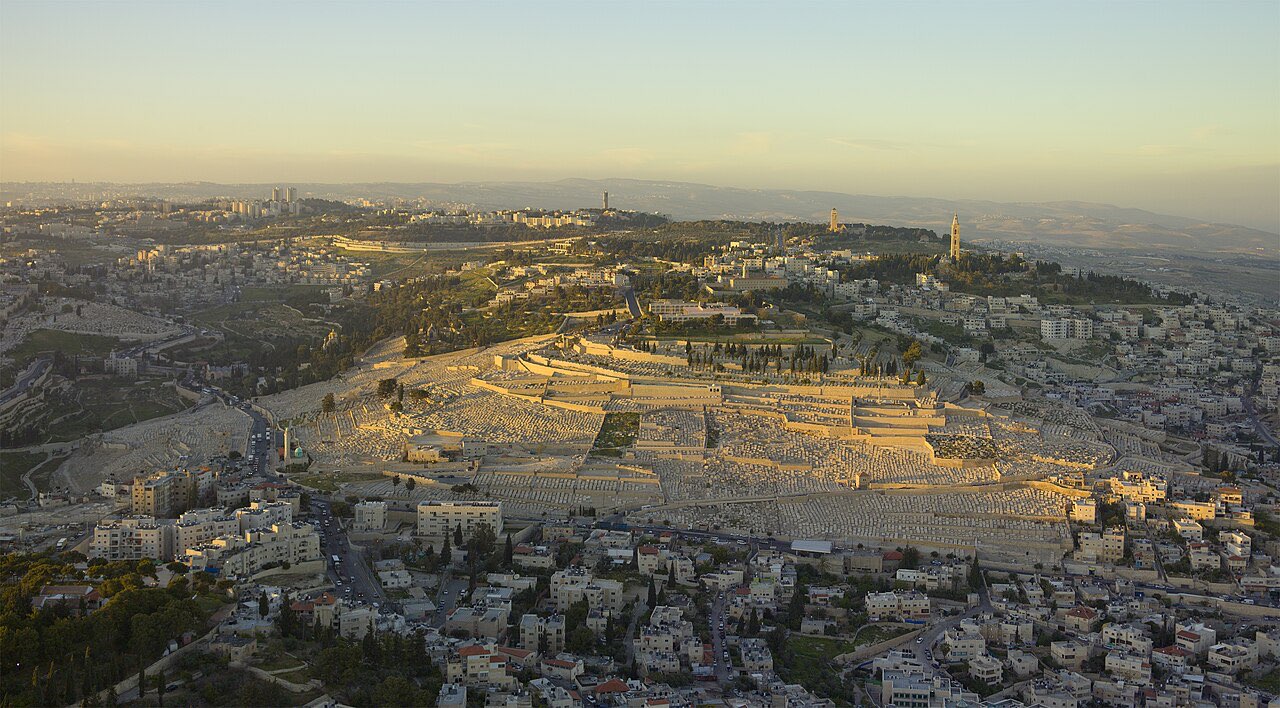
The Mount of Olives is the ridge that faces Jerusalem across the Kidron valley, a hundred feet higher than the temple mount and separated from it by a fifteen-minute walk. David fled over it weeping when Absalom rebelled (2 Samuel 15:30); Ezekiel watched the glory of the LORD pause over it as it left the city (Ezekiel 11:23); Zechariah promised the day when “his feet shall stand on the Mount of Olives” (Zechariah 14:4).
The Gospels crowd its slopes with scenes. Jesus descended it on a colt at the triumphal entry while the crowds spread cloaks and palms, and paused mid-slope to weep over the city spread out below (Luke 19:28-44). He slept on or near it each night of Passion Week (Luke 21:37), and sitting on it “opposite the temple” he delivered the Olivet Discourse on the temple’s doom and his return (Mark 13). At its foot lay Gethsemane; near its summit, Bethany. And from this ridge the risen Christ ascended, while two angels promised he will come back “in the same way” (Acts 1:9-12) – the words a reader of Zechariah cannot help but hear geographically.
The slope facing the city is blanketed by the oldest Jewish cemetery in the world – generations buried facing the temple mount, waiting for resurrection morning.
In the New Testament
- The triumphal entry begins on its slope (Luke 19:28-40)
- Jesus weeps over Jerusalem (Luke 19:41-44)
- The Olivet Discourse (Matthew 24-25; Mark 13)
- Gethsemane at its foot (Mark 14:26-42)
- The ascension (Luke 24:50-53; Acts 1:9-12)