
Miletus
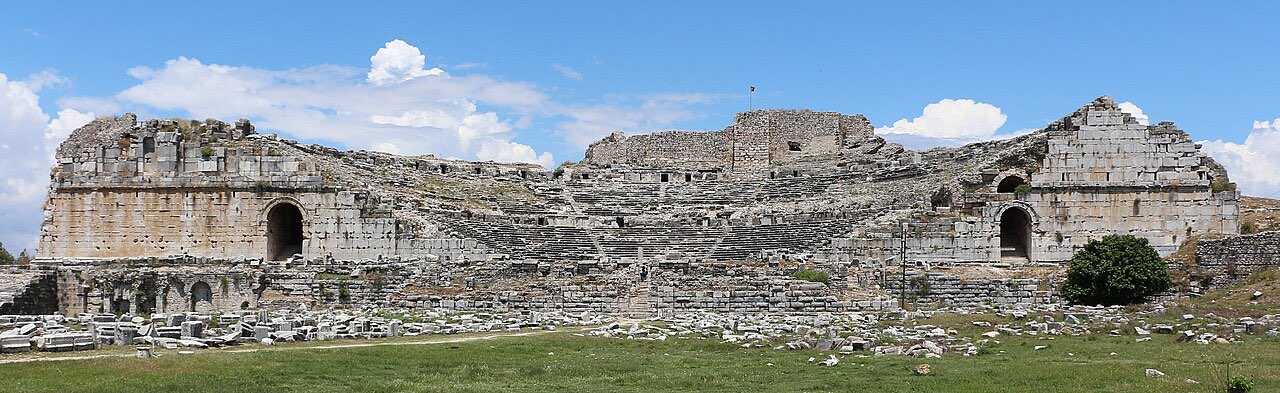
Miletus was an ancient glory grown quieter: mother-city of dozens of colonies, home of the first Greek philosophers, by Paul’s day a respectable harbor town some thirty-five miles south of Ephesus. Hurrying to reach Jerusalem by Pentecost and unwilling to be swallowed by Ephesus itself, Paul put in at Miletus and sent for the Ephesian elders to come to him (Acts 20:15-17).
What he said to them on the shore is the only recorded Pauline speech addressed to Christians, and it reads like his ministry distilled (Acts 20:18-35): the tears and trials, teaching “in public and from house to house,” the whole counsel of God held back from no one; the Spirit’s warning of imprisonment ahead – “but I do not account my life of any value… if only I may finish my course”; the charge to shepherd “the church of God, which he obtained with his own blood”; the warning of wolves to come; and a saying of Jesus preserved nowhere else: “It is more blessed to give than to receive.”
Then they knelt on the beach and prayed, “and there was much weeping… being sorrowful most of all because of the word he had spoken, that they would not see his face again” (Acts 20:36-38). Years later Paul passed by once more, leaving Trophimus there ill (2 Timothy 4:20) – a reminder that even apostles left some things unhealed and unfinished.
In the New Testament
- The farewell to the Ephesian elders (Acts 20:15-38)
- Trophimus left ill at Miletus (2 Timothy 4:20)