
Gethsemane
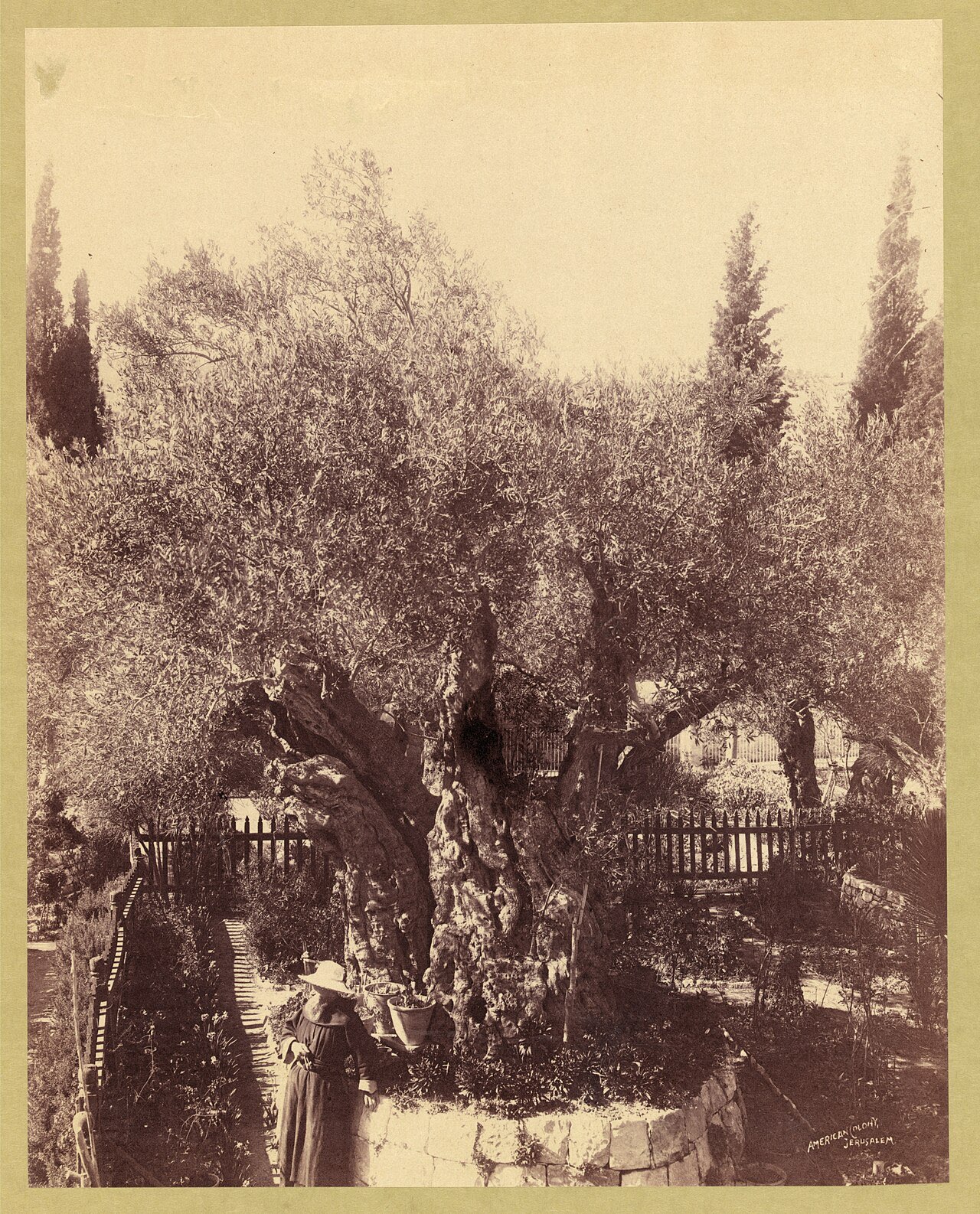
Gethsemane means “oil press” – an olive grove with its pressing equipment, on the lower slope of the Mount of Olives just across the Kidron from the temple. John notes that Jesus “often met there with his disciples” (John 18:2); it was their regular camp during Jerusalem visits, which is precisely why Judas knew where to bring the soldiers.
Here, after the Last Supper, came the agony: “My soul is very sorrowful, even to death.” Three times Jesus prayed, “My Father, if it be possible, let this cup pass from me; nevertheless, not as I will, but as you will,” while Peter, James, and John slept a stone’s throw away (Matthew 26:36-46). Luke the physician adds that his sweat became like great drops of blood (Luke 22:44). The place name preaches itself: in the garden of the oil press, the Man of Sorrows was pressed until the will of God ran clear. Where the first Adam’s “not your will” was spoken in a garden, the last Adam’s “your will be done” was spoken in another.
Then the torches arrived, the kiss, the severed ear and its healing, the arrest – and “all the disciples left him and fled” (Matthew 26:47-56). The garden’s ancient olives, some with root systems possibly a thousand years old and more, still stand beside the Church of All Nations, which encloses the traditional rock of the agony.
In the New Testament
- The agony in the garden (Matthew 26:36-46; Mark 14:32-42; Luke 22:39-46)
- The betrayal and arrest (Matthew 26:47-56; John 18:1-12)