
Eden
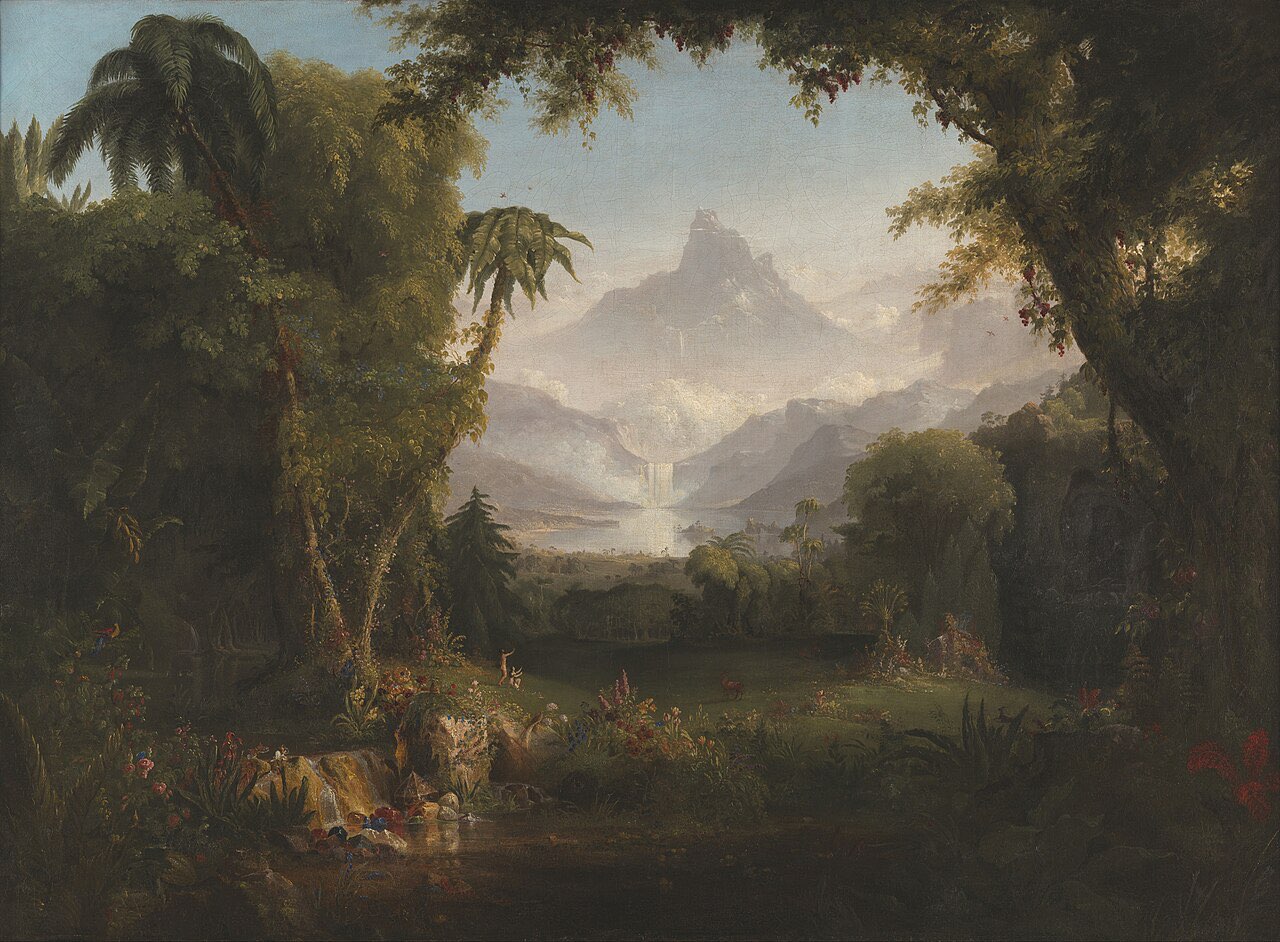
Genesis plants Eden “in the east” with a river and four branches (Genesis 2:8-14) – and no expedition has ever found it, because the way back is barred (Genesis 3:24). It belongs on this site’s map of the New Testament not as an address but as a backdrop: the garden is the stage on which Paul explains what went wrong with the world and what Christ came to undo.
“As in Adam all die, so also in Christ shall all be made alive” (1 Corinthians 15:22). Romans 5 works the comparison clause by clause: one man’s trespass brought condemnation and death to all; one man’s obedience brings justification and life. Paul reads Genesis 3 as everyone’s biography – sin entering, death spreading – and the gospel as its reversal, with Jesus as “the last Adam” who succeeds where the first failed (Romans 5:12-21; 1 Corinthians 15:45-49). The pattern shows up in the details of the passion: tested in a garden where Adam was tested in a garden; a curse of thorns worn as a crown; a tomb “in a garden” opening onto a new creation.
And Eden is where the Bible is going as well as where it began. The last chapter of Revelation reopens the gate: the river of the water of life, and “the tree of life… and no longer will there be anything accursed” (Revelation 22:1-3). Paradise lost is not merely restored but exceeded – a garden become a garden city.
In the New Testament
- Adam and Christ (Romans 5:12-21)
- The first and last Adam (1 Corinthians 15:21-22, 45-49)
- The serpent’s defeat promised (Romans 16:20; cf. Genesis 3:15)
- Eden reopened (Revelation 2:7; 22:1-5)