
Canaan
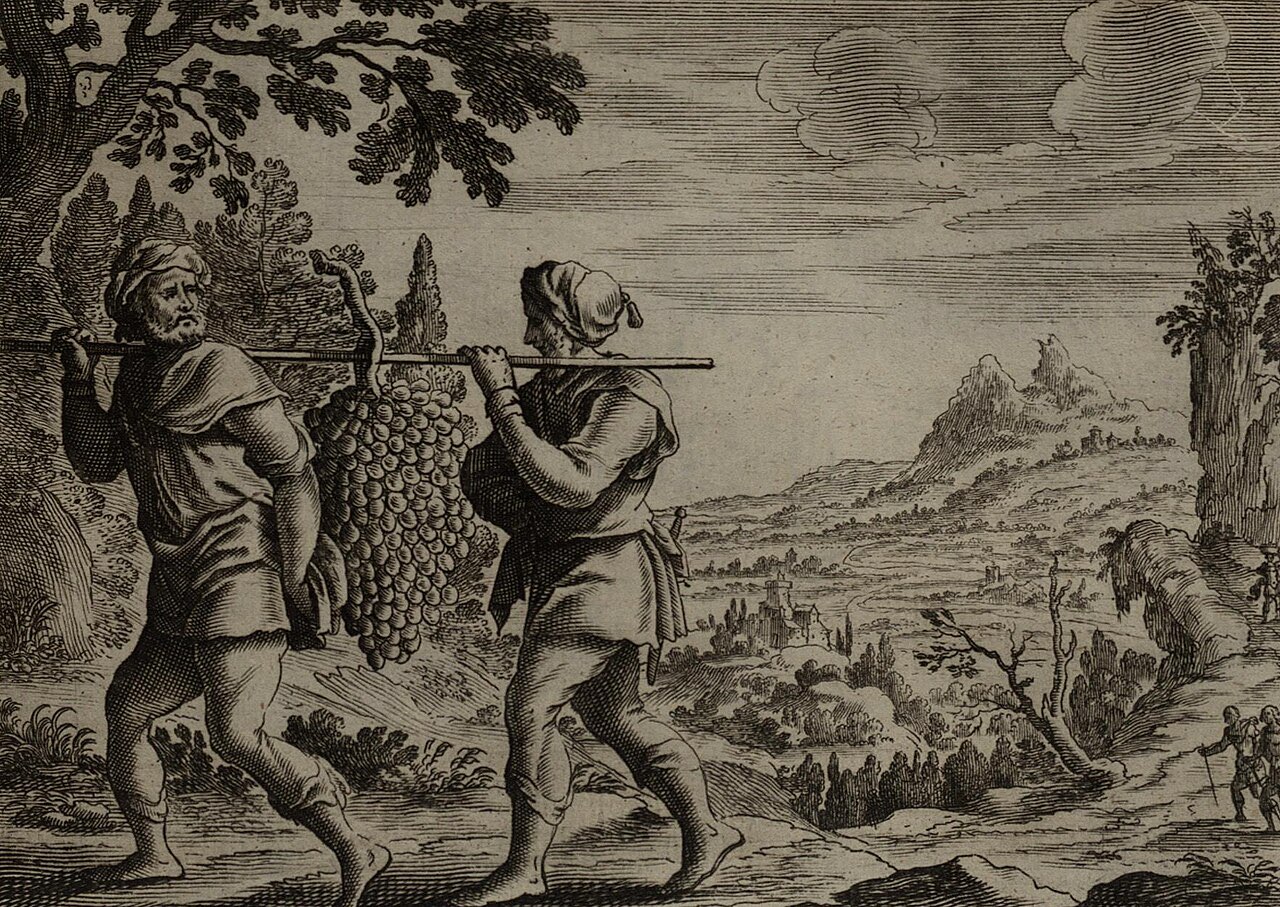
Canaan is, of course, a real place – it is the very land drawn on this site’s Holy Land maps, “a land flowing with milk and honey” promised to Abraham’s offspring (Genesis 12:7; Exodus 3:8). But the New Testament book that dwells on it, Hebrews, treats Canaan less as geography than as a question: if Joshua’s conquest had delivered God’s rest, why does the Bible keep offering rest centuries later?
Hebrews builds the argument from Psalm 95 (Hebrews 3-4). The wilderness generation saw the spies’ grapes and still refused to enter, “so they could not enter because of unbelief” – the Bible’s sternest warning against hearts hardened by delay. And even those who did cross the Jordan did not exhaust the promise: “if Joshua had given them rest, God would not have spoken of another day later on. So then, there remains a Sabbath rest for the people of God” (Hebrews 4:8-9). Canaan was real, and it was a down payment: the patriarchs themselves treated it that way, living in tents, “looking forward to the city that has foundations” (Hebrews 11:8-16).
That is why this page sits with the symbols rather than the map pins. As Hebrews reads it, every acre of the land points beyond itself – “Today, if you hear his voice, do not harden your hearts.”
In the New Testament
- The wilderness generation’s failure to enter (Hebrews 3:7-19; 1 Corinthians 10:1-13)
- The rest that remains (Hebrews 4:1-11)
- The patriarchs seeking a better country (Hebrews 11:8-16)
- The land promise in the apostles’ preaching (Acts 7:2-5; 13:17-19)