
The Widow of Nain
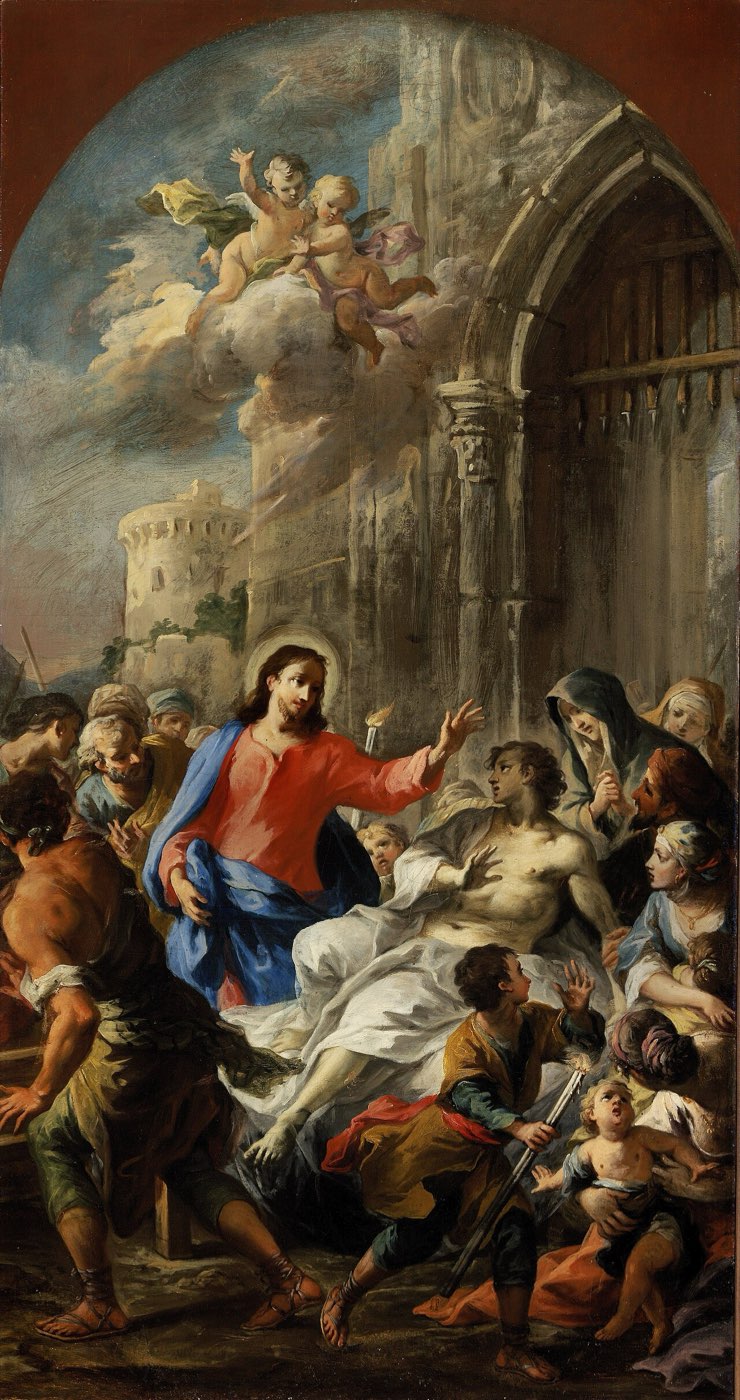
She never asks for anything. That is what sets the widow of Nain apart in the Gospels’ gallery of miracles: no plea, no demonstration of faith, no friends digging through a roof. Just a funeral procession coming out of a small town’s gate – a young man, “the only son of his mother, and she was a widow” (Luke 7:12), which in that economy meant her grief was also her ruin: no husband, now no son, no one to provide or protect.
Two processions met at the gate: death’s, coming out, and life’s, coming in. “When the Lord saw her, he had compassion on her and said to her, ‘Do not weep.’” Then he touched the open bier – accepting ritual defilement to reach the dead – and spoke to the corpse as if to a sleeping boy: “Young man, I say to you, arise.” Luke finishes the miracle with its tenderest clause: “and Jesus gave him to his mother” (Luke 7:13-15). The crowd’s cry – “A great prophet has arisen among us!” – remembered Elijah and Elisha, who had raised widows’ sons in this same countryside; the reader is meant to see more than a prophet.
In the New Testament
- The raising at Nain (Luke 7:11-17)
- The report that reaches John the Baptist in prison (Luke 7:18-23)
Key Locations
- Nain The small Galilean town where Jesus raised a widow's only son at the town gate.