
Stephen
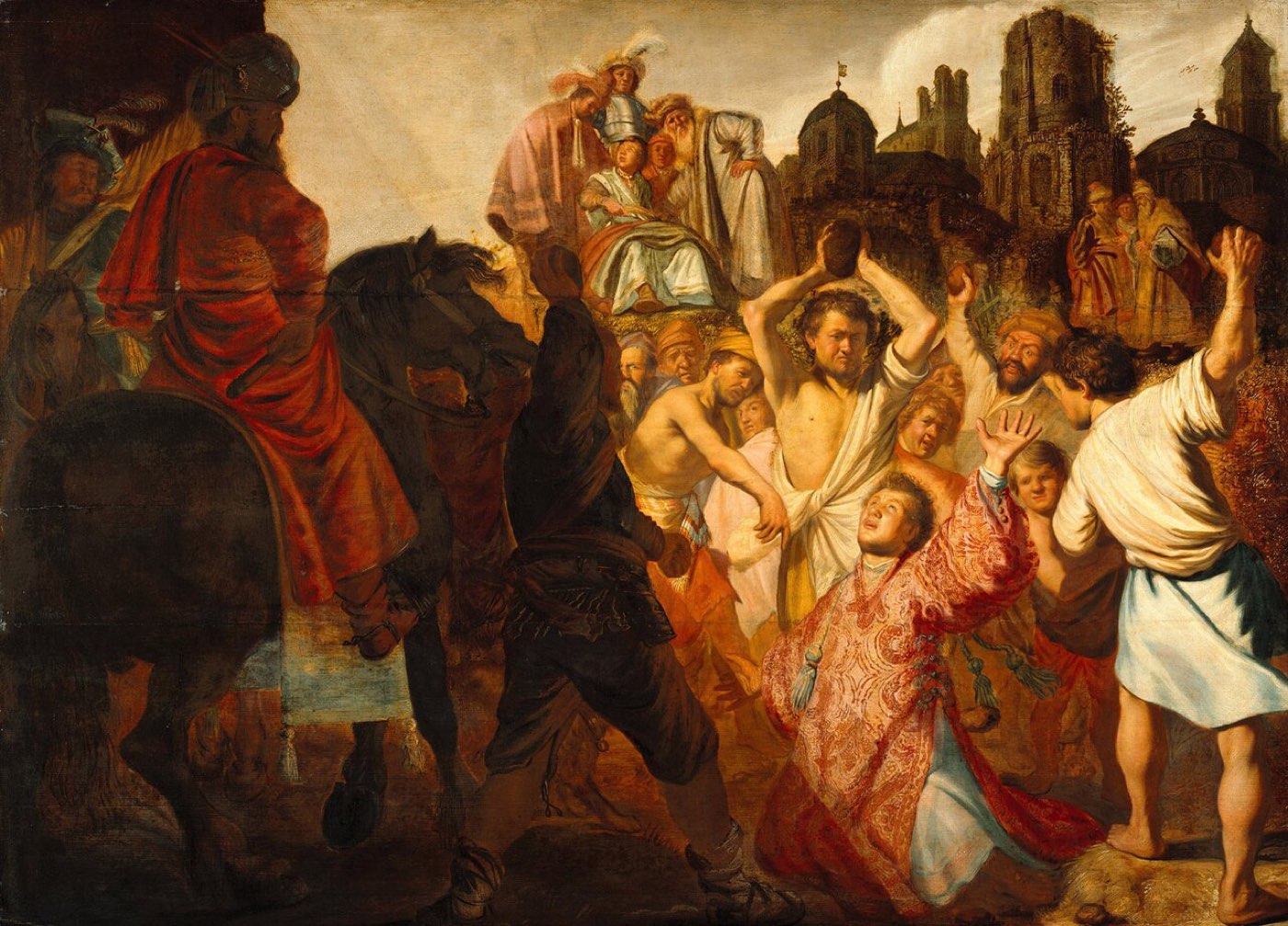
Stephen enters as a table-server: one of seven chosen to sort out the widows’ food distribution, “a man full of faith and of the Holy Spirit” (Acts 6:1-6). The administrative post could not contain him. “Full of grace and power,” he worked wonders and out-argued the synagogue debaters, who, unable to withstand “the wisdom and the Spirit with which he was speaking,” fell back on false witnesses and a blasphemy charge (Acts 6:8-14). At his arraignment the council saw “his face was like the face of an angel.”
His defense – the longest speech in Acts – is a masterclass in Israel’s own Scriptures: Abraham, Joseph, Moses, the tabernacle, retold to show a pattern of God moving outside the holy land and holy building, and his people resisting every deliverer sent to them, climaxing in the accusation turned around: “you have now betrayed and murdered” the Righteous One (Acts 7:1-53). The vision that sealed his fate was Daniel 7 seen open-eyed: “Behold, I see the heavens opened, and the Son of Man standing at the right hand of God” – risen, as if to receive him.
Stephen died echoing his Lord line for line – “receive my spirit”; “do not hold this sin against them” – while “a young man named Saul” minded the coats and approved (Acts 7:54-8:1). The persecution his death unleashed scattered the gospel to Samaria and Antioch, and Augustine’s summary has never been bettered: the church owes Paul to the prayer of Stephen.
In the New Testament
- Chosen among the Seven (Acts 6:1-7)
- Ministry, arrest, and the great speech (Acts 6:8-7:53)
- Martyrdom, and Saul consenting (Acts 7:54-8:3; 22:20)
Key Locations
- Jerusalem The holy city -- David's capital, the temple's home, the stage of the crucifixion, resurrection, and Pentecost.