
The Rich Fool
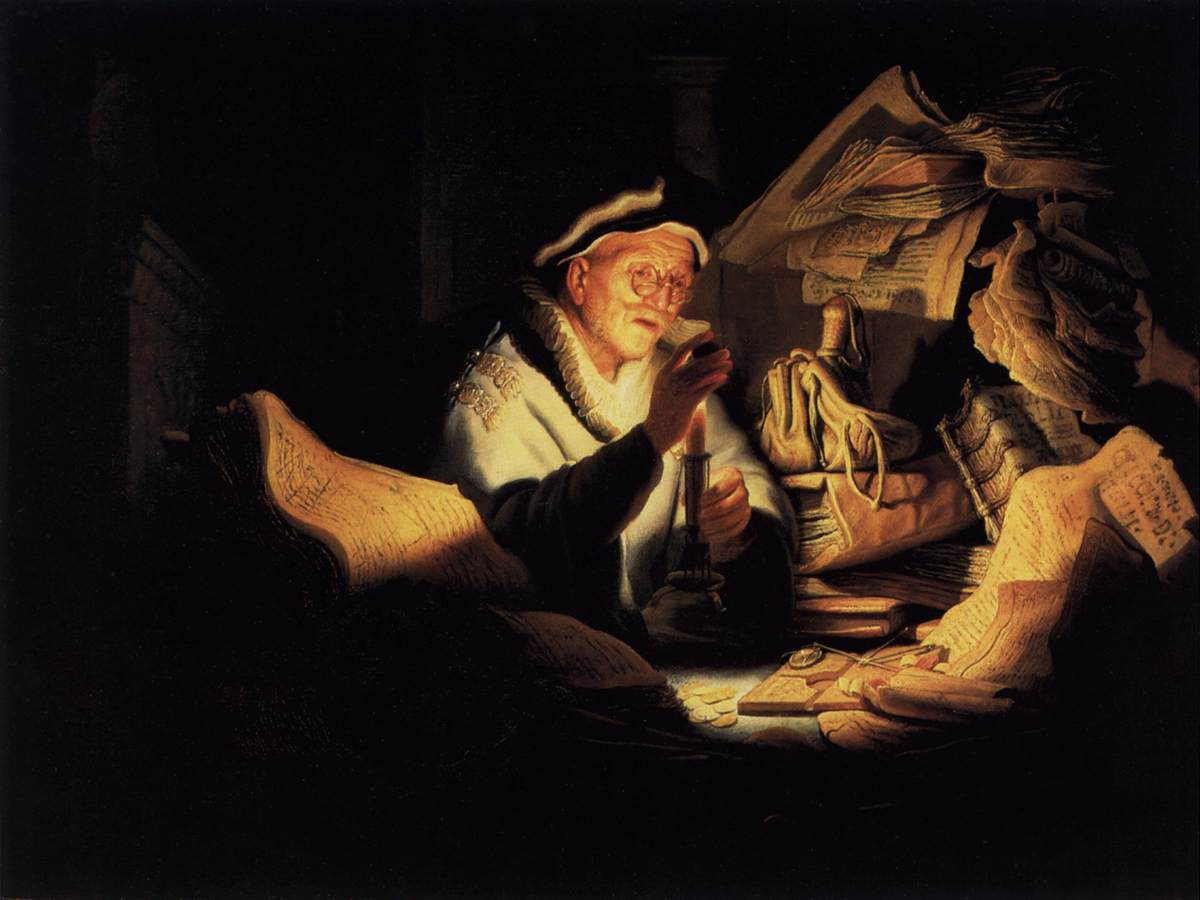
A man in the crowd wanted Jesus to referee an inheritance dispute; Jesus declined the case but diagnosed the disease: “Take care, and be on your guard against all covetousness, for one’s life does not consist in the abundance of his possessions” (Luke 12:13-15). Then the story.
A rich man’s land “produced plentifully” – the wealth itself is never called wrong – and his planning session is a one-man show: “he thought to himself, ‘What shall I do?… I will tear down my barns and build larger ones… And I will say to my soul, “Soul, you have ample goods laid up for many years; relax, eat, drink, be merry.”’” Six verses, twelve first-person pronouns, and not one other character: no God, no neighbor, no poor man at the gate. He even addresses his own soul, since no one else is in the room (Luke 12:16-19).
Then a second voice enters the monologue: “But God said to him, ‘Fool! This night your soul is required of you, and the things you have prepared, whose will they be?’” All that security had one unfunded liability – the owner’s mortality. Jesus’ closing line converts the story into a ledger every reader is keeping: “So is the one who lays up treasure for himself and is not rich toward God” (Luke 12:20-21). The fool’s error was not the barns; it was the portfolio with nothing in the only account that survives the night.
In the New Testament
- The parable of the rich fool (Luke 12:13-21)
- The teaching that follows: anxiety, ravens, and treasure (Luke 12:22-34)