
The Prodigal Son and the Elder Brother
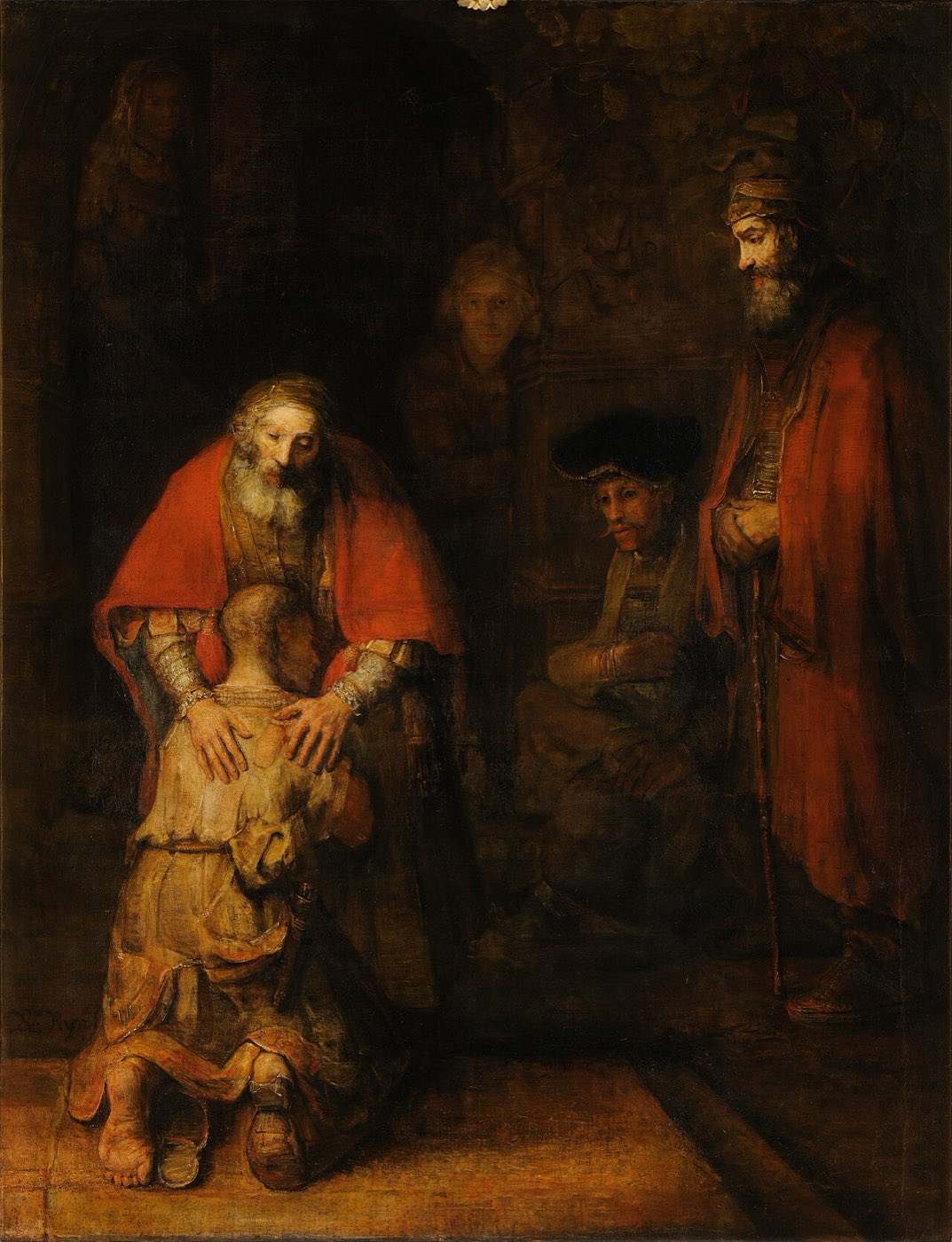
The characters in this page are figures in a story Jesus told – but no fictional people have shaped more real lives. Stung by the Pharisees’ grumble that “this man receives sinners and eats with them,” Jesus answered with three lost things – a sheep, a coin, and two sons (Luke 15).
The younger son’s arc is conversion in miniature: the inheritance demanded (wishing his father dead, in effect), the far country, the famine, the pigsty where “he came to himself,” and the rehearsed confession – “I am no longer worthy to be called your son.” He never gets to finish it. “While he was still a long way off, his father saw him and felt compassion, and ran” – an old Middle Eastern landowner hiking his robes to sprint, absorbing the village’s shame before his son could reach it – “and embraced him and kissed him.” Robe, ring, shoes, feast: sonship restored before the speech was done (Luke 15:11-24).
Then the parable turns to its real target. The elder brother – dutiful, resentful, refusing to enter – audits his years of service (“I never disobeyed your command”) and disowns his sibling (“this son of yours”). The father comes out and pleads with him too: “Son, you are always with me… It was fitting to celebrate.” There the story stops, mid-invitation, because its ending belonged to the Pharisees listening – and to every older brother since. Both sons were lost; only one, so far, has come home.
In the New Testament
- The parable of the two sons (Luke 15:11-32)
- Its frame: the lost sheep and the lost coin (Luke 15:1-10)