
Melchizedek
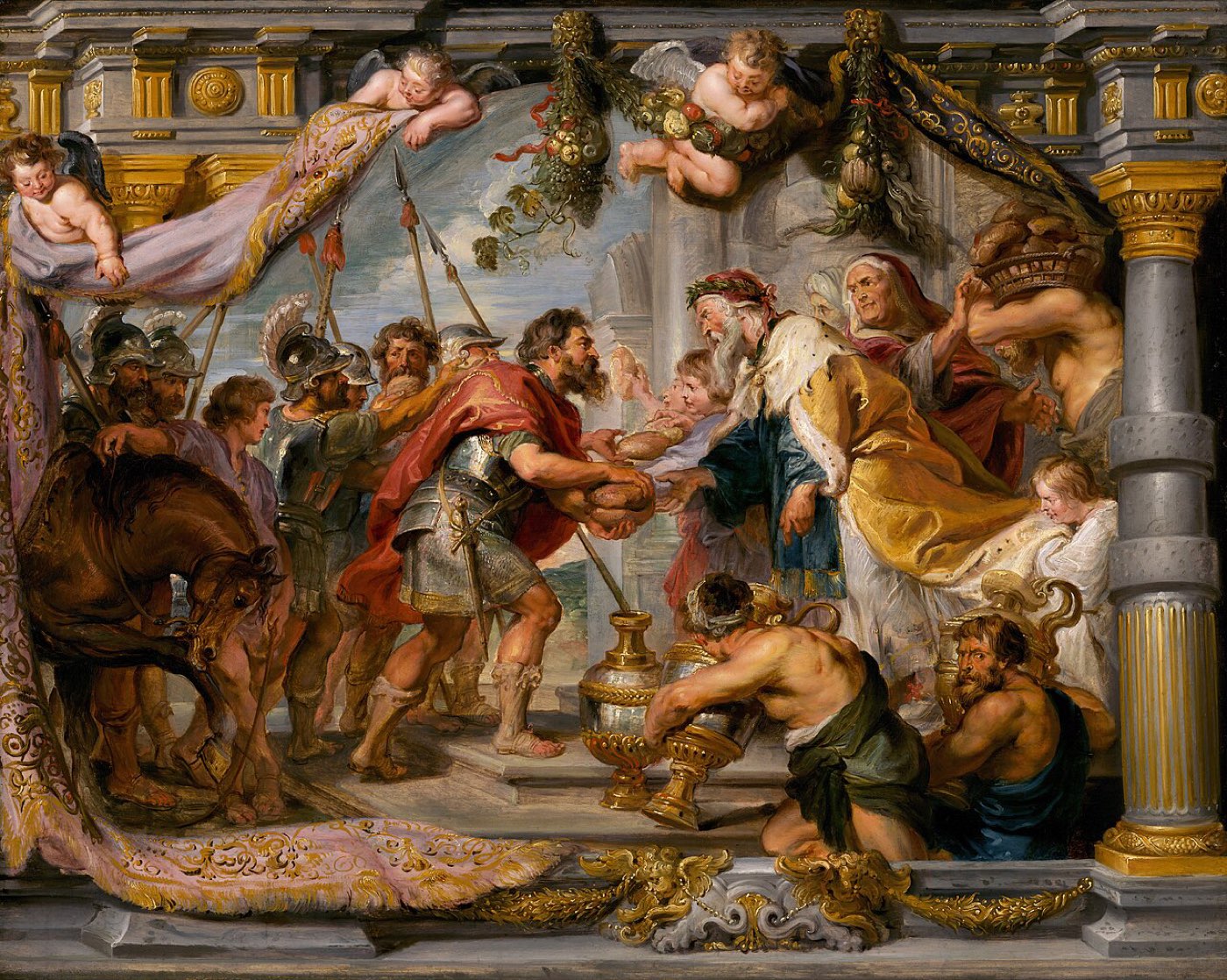
He crosses the Bible’s stage in three verses. Returning from battle, Abraham is met by “Melchizedek king of Salem” – the future Jerusalem – who brings out bread and wine, blesses him as “priest of God Most High,” and receives a tenth of everything (Genesis 14:18-20). Then he vanishes, until a single psalm line makes him a prophecy: the LORD’s oath to David’s Lord, “You are a priest forever after the order of Melchizedek” (Psalm 110:4).
Hebrews builds its central argument on those fragments (Hebrews 5-7). Jesus, from Judah, could never be a priest under the law – the wrong tribe. But there is an older, higher order. Melchizedek’s very silences preach: no recorded father, mother, or genealogy, no birth or death – “resembling the Son of God he continues a priest forever.” His name and city preach too: king of righteousness, king of peace. And his greatness is proven by arithmetic Hebrews delights in: Abraham – with Levi still “in his loins” – paid tithes to him and was blessed by him, and “the inferior is blessed by the superior” (Hebrews 7:1-10).
The conclusion is the letter’s good news: a priest by “the power of an indestructible life,” holding his office permanently, “consequently able to save to the uttermost those who draw near to God through him, since he always lives to make intercession for them” (Hebrews 7:16, 24-25). The mysterious king who once brought out bread and wine for a weary traveler turns out to have been the Bible’s first sketch of its final Priest.
In the New Testament
- The order of Melchizedek argued (Hebrews 5:5-10; 6:19-7:28)
- The sources: Genesis 14:18-20; Psalm 110:4
Key Locations
- Jerusalem The holy city -- David's capital, the temple's home, the stage of the crucifixion, resurrection, and Pentecost.