
Mary and Martha of Bethany
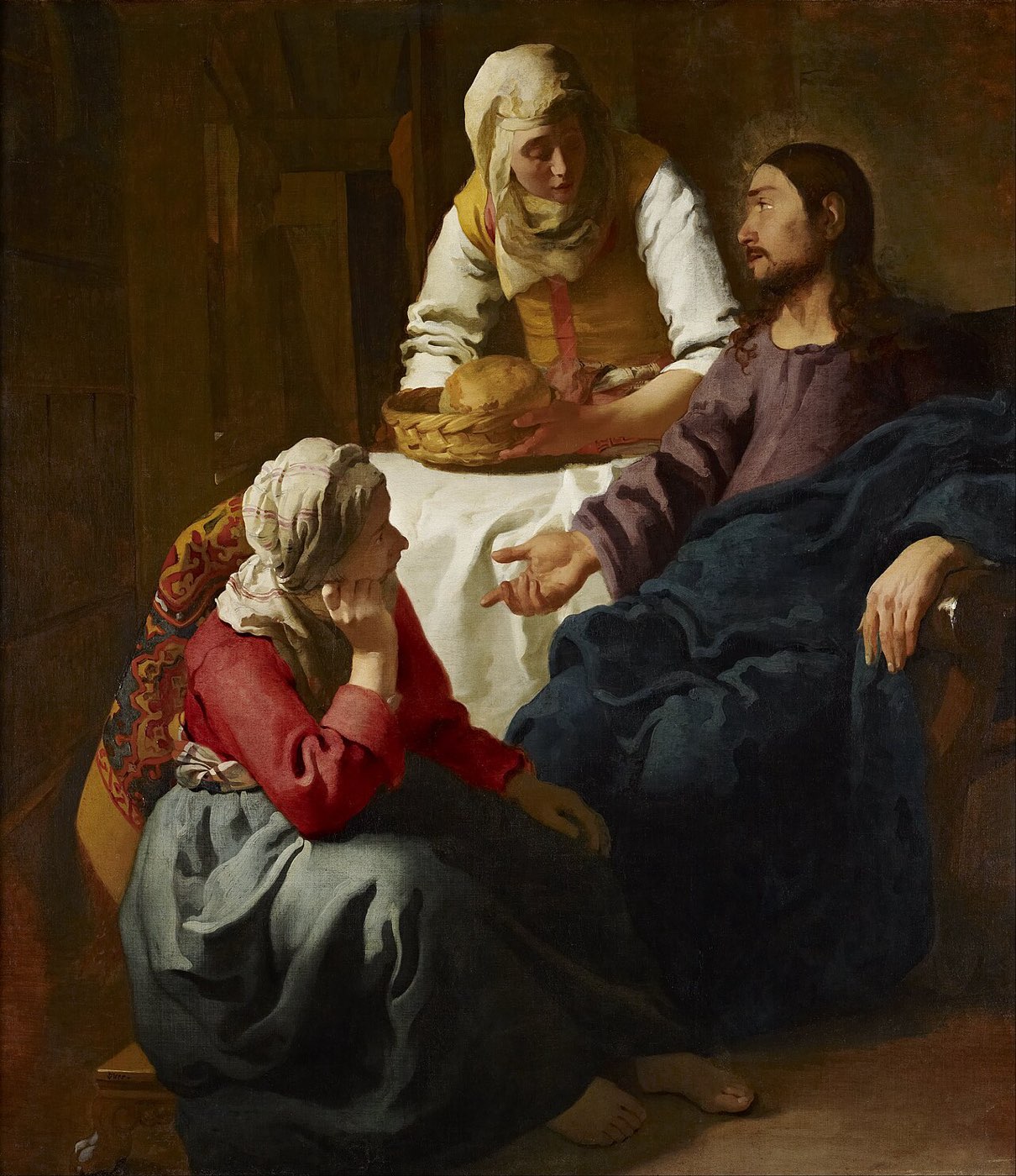
Luke introduces them in one unforgettable domestic scene: Martha “distracted with much serving,” Mary seated at the Lord’s feet – a disciple’s posture, and a scandalous one for a woman. Martha’s complaint (“Tell her then to help me”) drew the gentle double name that in Scripture always signals love: “Martha, Martha, you are anxious and troubled about many things, but one thing is necessary. Mary has chosen the good portion” (Luke 10:38-42). Not a rebuke of service – Jesus ate the dinner – but of anxiety crowding out the word.
John 11 shows the sisters at full depth. Both greet Jesus after Lazarus’ death with the same sentence – “Lord, if you had been here, my brother would not have died” – but Martha comes out arguing and Mary comes out weeping, and Jesus meets each in kind: to Martha, theology’s high-water mark (“I am the resurrection and the life”) and the confession that matches Peter’s (“You are the Christ, the Son of God”); with Mary, tears – “Jesus wept” (John 11:20-35).
Their last scene divides the labor once more, without complaint this time: “Martha served,” and Mary poured out a year’s wages of nard on Jesus’ feet, filling the house with fragrance and anointing him “for the day of my burial” (John 12:1-8). Two temperaments, one devotion; the church has needed both ever since.
In the New Testament
- The good portion (Luke 10:38-42)
- Lazarus: Martha’s confession, Mary’s tears (John 11)
- The supper and the anointing (John 12:1-8)
Key Locations
- Bethany The village of Mary, Martha, and Lazarus on the Mount of Olives, Jesus' Judean home base.