
Lazarus
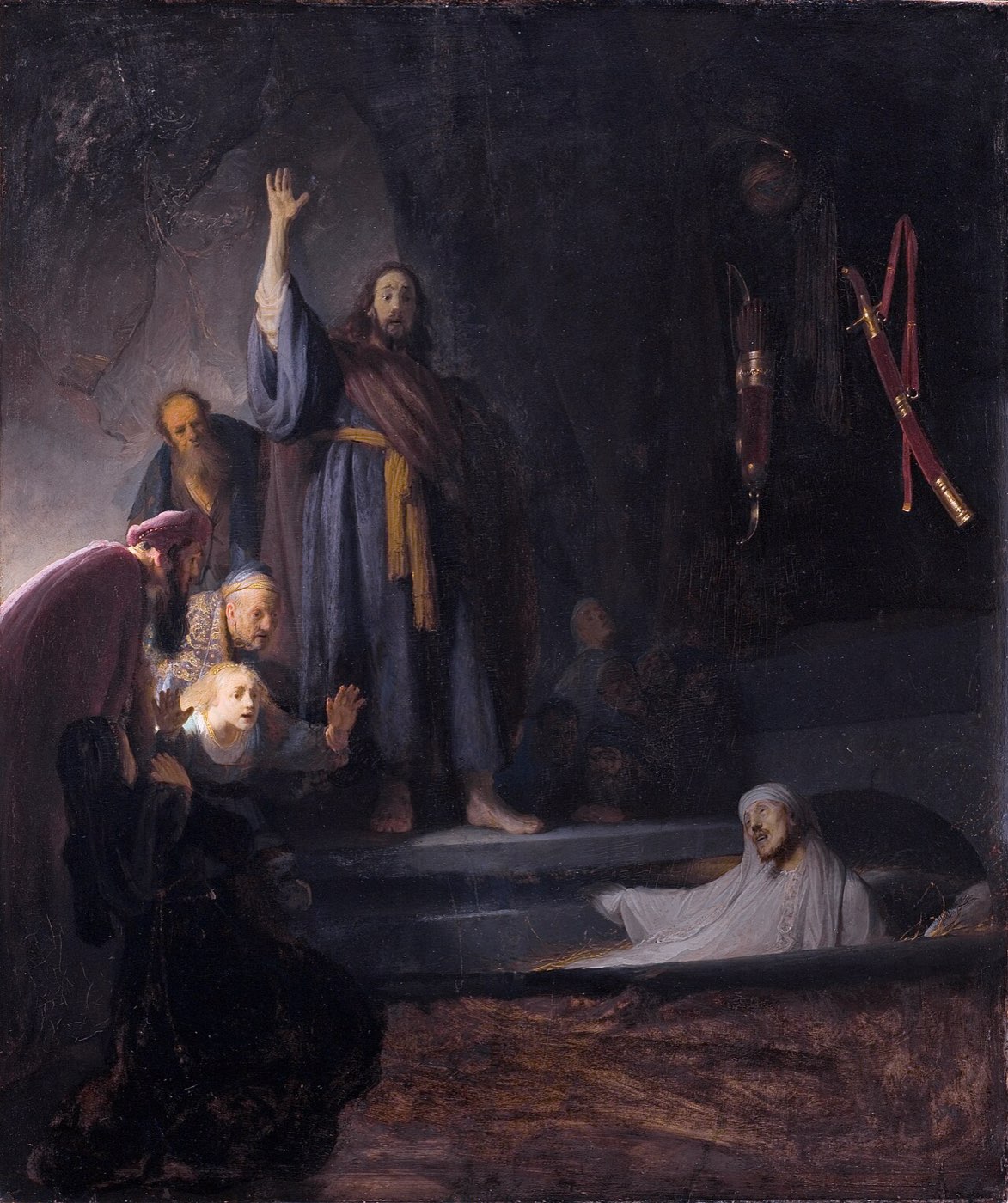
Lazarus of Bethany never speaks a recorded word, and his silence is part of the story’s power: he is what grace does to a man, not what a man does for grace. John introduces him entirely in terms of love – “he whom you love is ill,” his sisters wrote (John 11:3) – and Jesus, on hearing it, stayed away two more days, so that the sign would leave no room for doubt: not resuscitation from a swoon but resurrection from four days in the tomb, past the point where, as blunt Martha said, “there will be an odor.”
At the tomb Jesus wept, groaned, and then prayed aloud for the crowd’s sake and shouted into the darkness: “Lazarus, come out.” And “the man who had died came out, his hands and feet bound with linen strips” – alive, and needing only to be unbound (John 11:38-44). It was the seventh and climactic sign of John’s Gospel, staged two miles from Jerusalem in the week’s walking distance of Passover, and it forced the decision: from that day the council planned Jesus’ death, and soon Lazarus’ too, “because on account of him many of the Jews were going away and believing in Jesus” (John 11:53; 12:9-11).
The man who came back from the dead thus became evidence in the case that sent his friend to die – and rise – in his place and everyone’s.
In the New Testament
- The illness, delay, and raising (John 11:1-44)
- The plot against Jesus – and against Lazarus (John 11:45-57; 12:9-11)
- At table with the risen guest of honor (John 12:1-2)