
Ananias and Sapphira
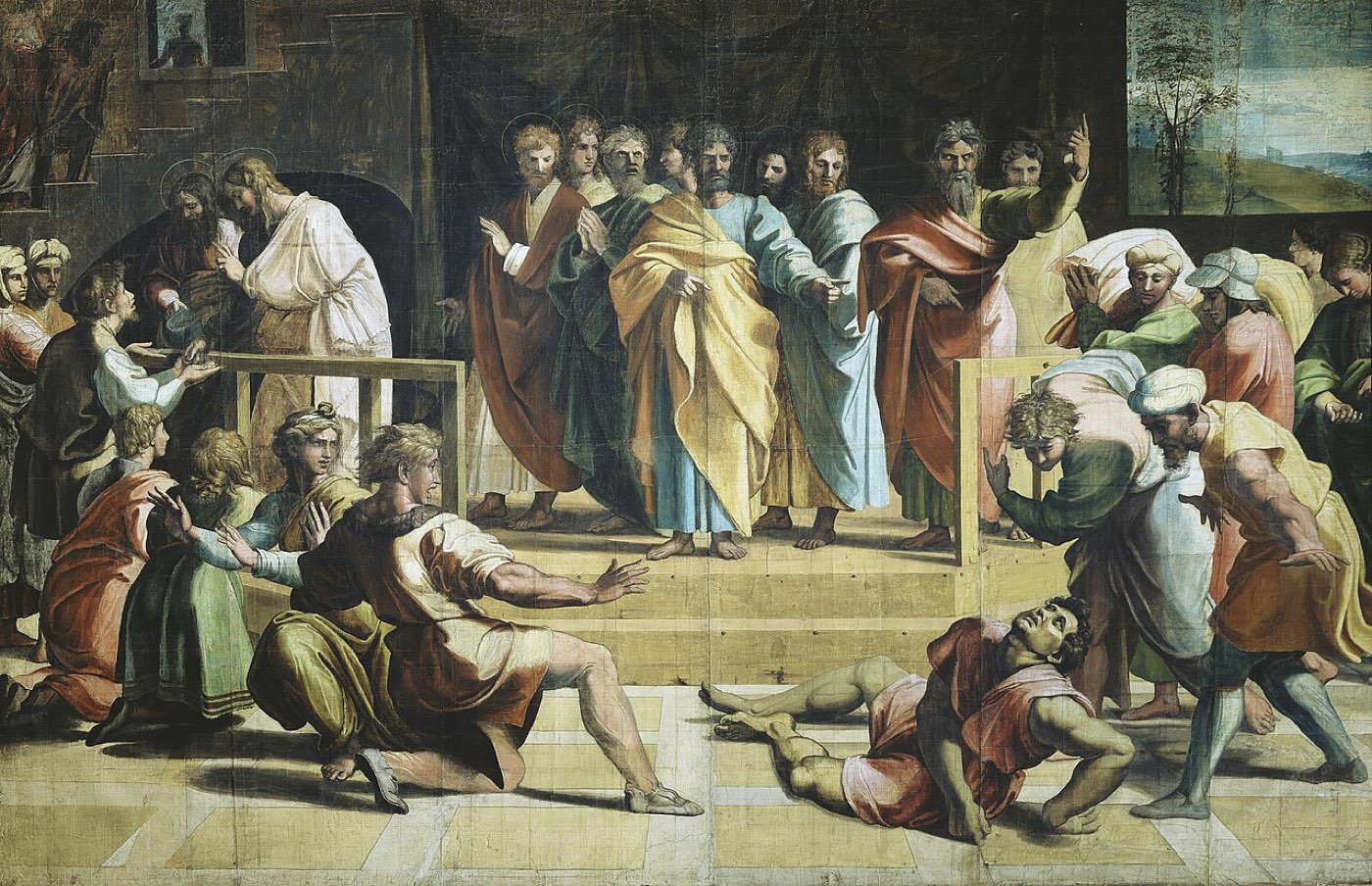
The backdrop is generosity: believers were selling property and laying the proceeds at the apostles’ feet, and Barnabas had just done it to general joy (Acts 4:36-37). Ananias and Sapphira wanted the reputation without the price tag. They sold a field, quietly kept back part of the money, and presented the rest as the whole – a lie told not with words but with a donation.
Peter’s questions cut to the theology of the thing: “Ananias, why has Satan filled your heart to lie to the Holy Spirit?… While it remained unsold, did it not remain your own?” The property was theirs; the gift was optional; only the pretense was fatal. “You have not lied to man but to God” – and Ananias fell dead. Three hours later Sapphira, given her own chance and repeating the agreed price, joined him, carried out by the same young men (Acts 5:1-10).
Luke’s refrain states the effect twice: “great fear came upon the whole church.” The first recorded sin inside the church was image management – performing a holiness not actually paid for – and God’s shocking severity at the threshold (like Achan at Jericho’s, like Nadab and Abihu at the tabernacle’s) marked how seriously he takes the community’s integrity. The story’s standing question is not about money at all: it asks whether we would rather be holy or merely look it.
In the New Testament
- The sin and the judgment (Acts 5:1-11)
- The contrast case: Barnabas’ gift (Acts 4:36-37)
Key Locations
- Jerusalem The holy city -- David's capital, the temple's home, the stage of the crucifixion, resurrection, and Pentecost.